
Why Does a Trailer Floor Rot Through?
And When It's Worth Patching Instead of Re-Decking
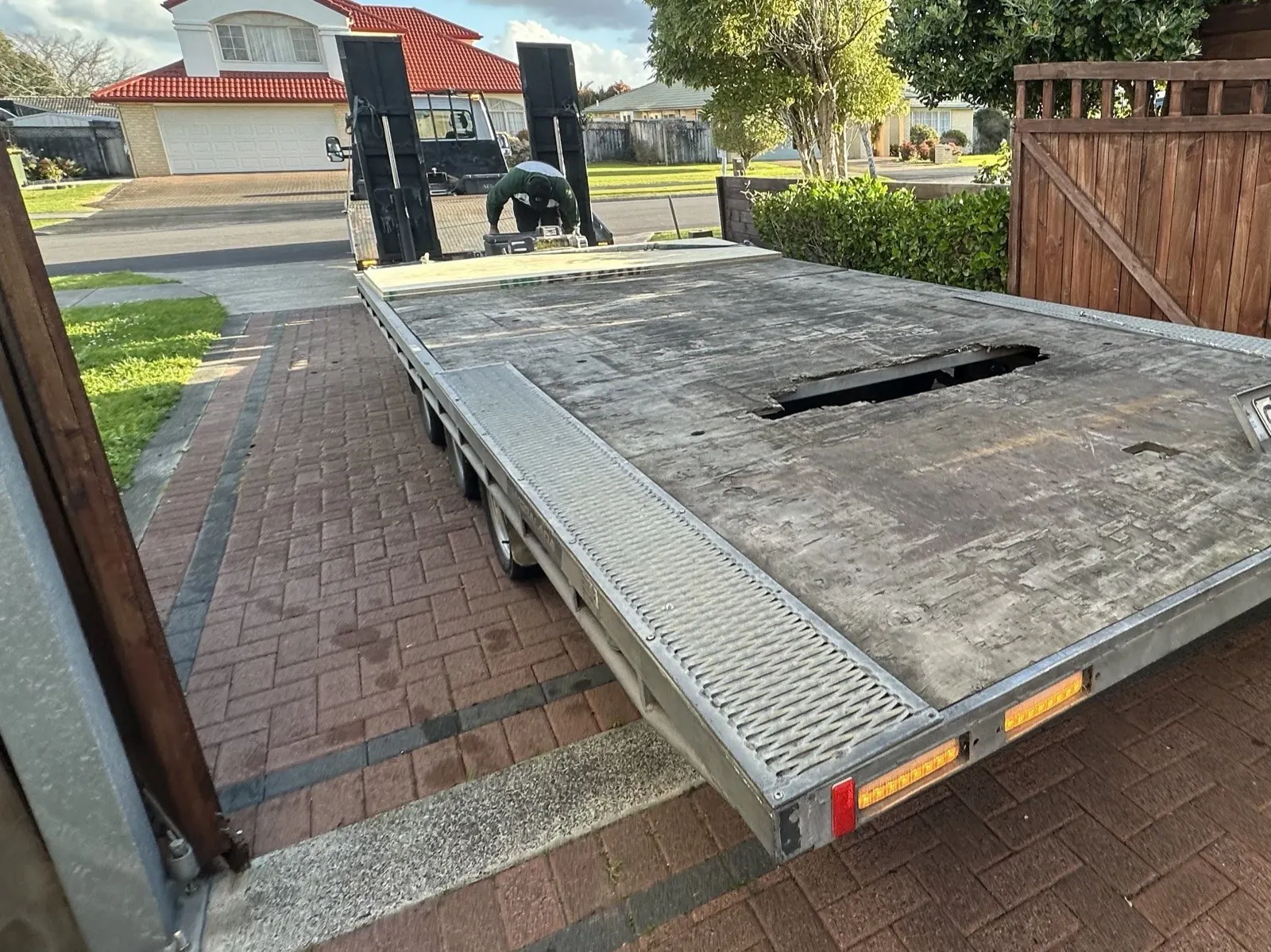
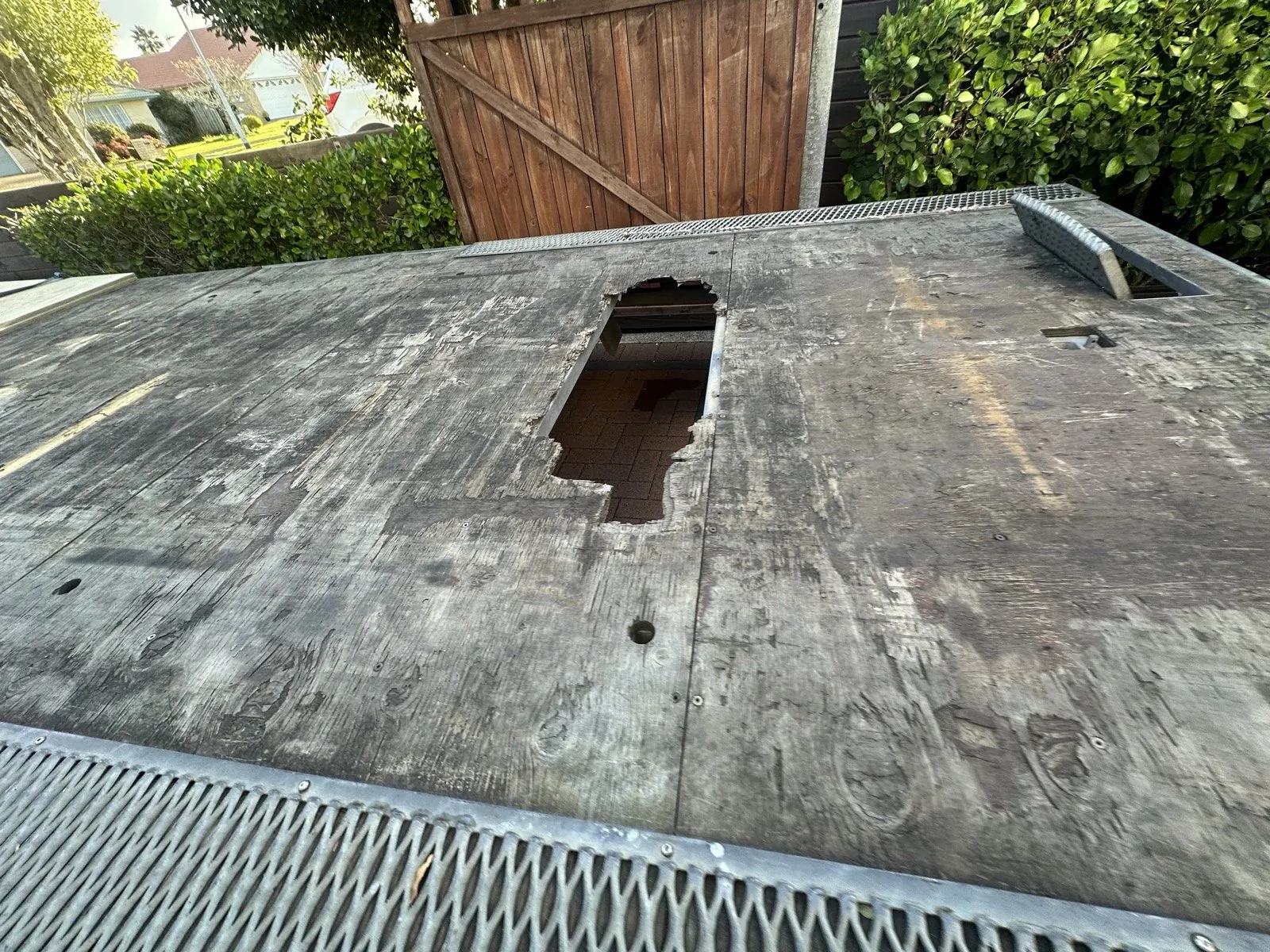
A flat-deck trailer came in with a hole you could see the driveway through. The repair took three hours and cost $300 — because only the damaged section needed replacing. Here's how that call gets made.
The hole is never where the trouble started. On a trailer the plywood deck is bolted down onto a steel frame, and the two materials want opposite things: the steel sheds water instantly, the timber holds onto it. Wherever the sheet sits hard against a member, water that works its way in has nowhere to drain and no air to dry it. It stays there, and the plywood gives way from the bottom face upward.
Which is why the top looks fine for years and then suddenly doesn't. By the time a boot goes through, the board has often been hollow underneath for a season or more.
How to Tell How Far It Has Gone
Press around the hole. Sound plywood is hard and gives nothing; failing plywood is spongy and the surface fibres lift under your thumb. Work outward until it goes firm again — that edge is the real size of the problem, and it is usually well beyond what you can see.
Then check the rest of the deck the same way, especially along every line where the sheet meets steel. That is the test that decides the whole job: one soft area is a patch, soft spots in several places is a re-deck. Skipping it is how people end up paying twice.
Patch or Re-Deck?
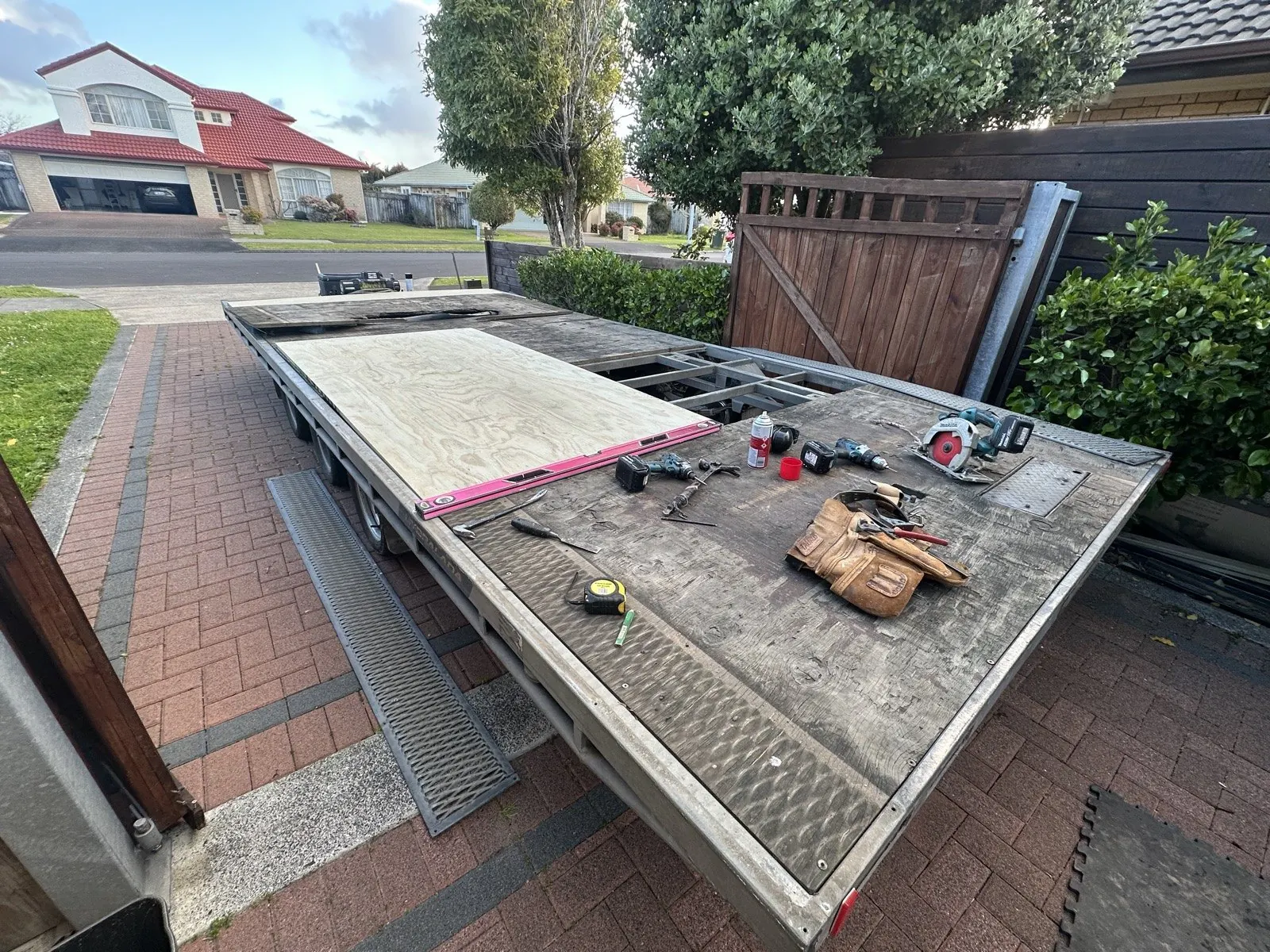
On this trailer the rest of the deck was worn but hard. So only the damaged section came out. Replacing sound plywood that still has years left in it costs the owner several times as much and buys nothing — the trailer does not carry any better for it.
The part worth paying attention to is what happens once the old piece is lifted. With the deck open you can finally see the steel underneath, and that is the moment to check it. Fitting a fresh sheet over a frame with its own problems just hides them under new timber.
Fit It Flush, or You'll Catch It
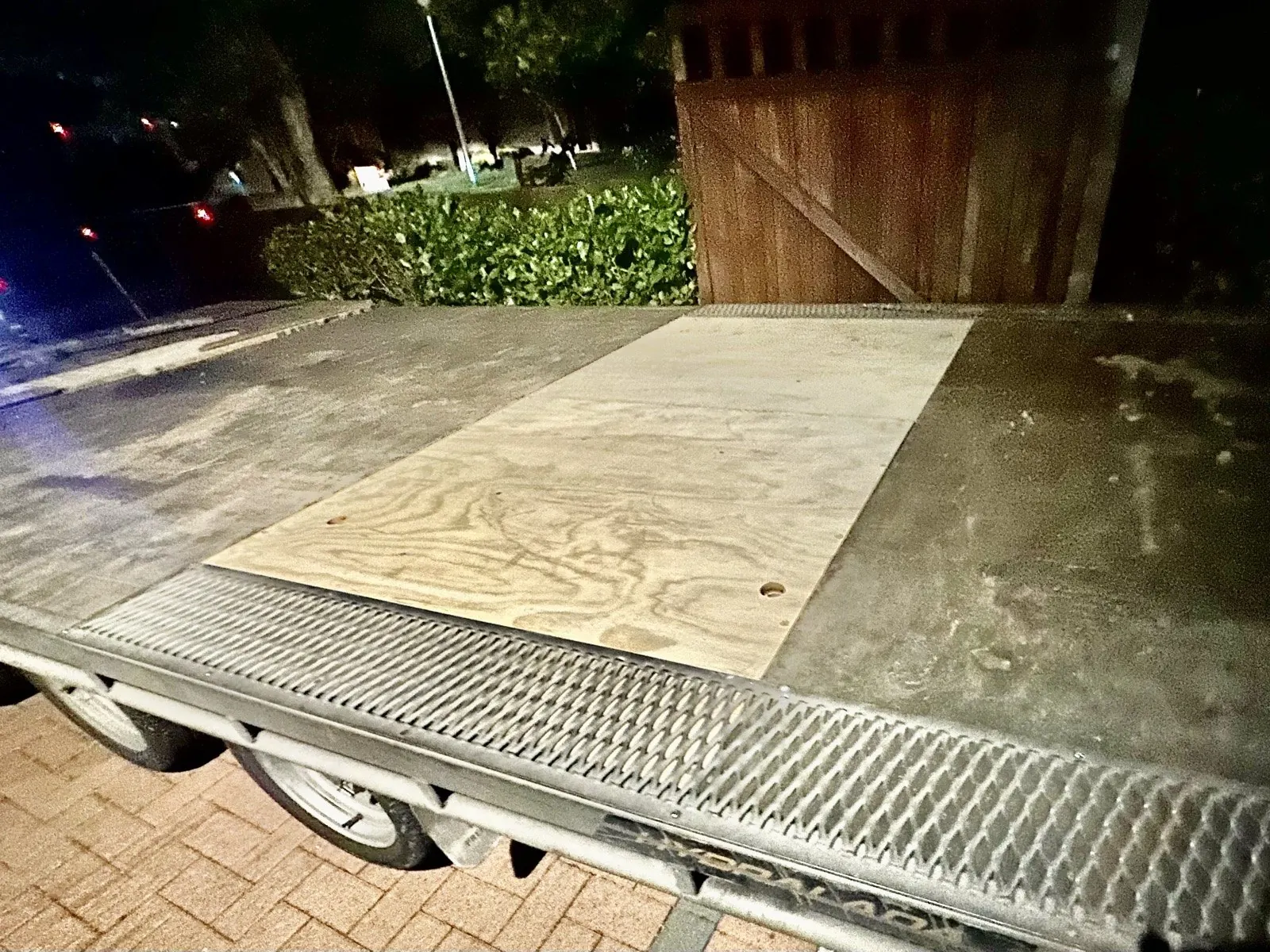
A new sheet that sits proud of the old deck becomes the thing every load drags against. It gets knocked, the edge lifts, and water finds its way back under the joint — which is where this all started. Cut it to sit between the frame members and finish it flush with what is already there, and the deck stays a deck rather than a step.
Do It When the Trailer Isn't Earning
This one was done after hours. It came in at the end of the day and went back to work the next morning, which for a trailer is most of the point — it earns nothing sitting on a repair job. Three hours, $300 including materials, labour and taking the old timber away.
The thing not worth putting off is the pressing test. A soft patch does not dry out and firm up again, and every load that crosses it makes the area bigger.
See the Full Repair
Every photo from this East Tamaki job, with the price, the hours and the guarantee.
View the Project →You May Also Need
Deck Gone Soft?
Send a photo and we'll tell you whether it's a patch or a re-deck — and we can take it after hours.
Request a Trailer Repair Quote
Three details are enough. We’ll call or message to discuss the rest.
Thanks — your request has been sent.
Rinat will call or message to discuss the job and cost.