
Deck Building, Repairs & Restoration in East Auckland
Build it properly. Repair it before the damage spreads.
A good deck should feel solid underfoot, drain properly and look like every board belongs exactly where it is. Handyman Botany builds, repairs and restores timber decking across Botany, Howick, Pakuranga, Cockle Bay and surrounding East Auckland suburbs — from individual damaged boards to new decking, framing and finishing work.
Is This You?
Decking Services
The Finished Surface Starts Underneath
Check the Site
Dimensions, access, levels and the existing structure assessed first.
Prepare the Framing
A solid, consistent base is built or prepared before decking goes on.
Set Out the Boards
Board positions and spacing planned before anything's permanently fixed.
Fix Neatly
Consistent gaps, fixings positioned to run in clean visual lines.
Finish the Edges
Boxing, fascia or other edge details fitted where required.
What Affects the Cost of Decking?
Small jobs — like replacing a few screws, swapping out a damaged board, or fixing a loose board back down — start from $180. Bigger jobs depend on scope, and pricing follows the factors below.
Overall length, width and shape affect materials and labour.
New framing is a different job to replacing boards over a sound structure.
Timber type, board dimensions and finish affect overall cost.
Deck height and access around the property can affect install time.
Boxing and fascia add material and labour but improve the final look.
Hidden deterioration under existing boards may need extra repair first.
For an initial assessment, send photos of the full deck or proposed area together with approximate measurements.
Recent Decking Projects
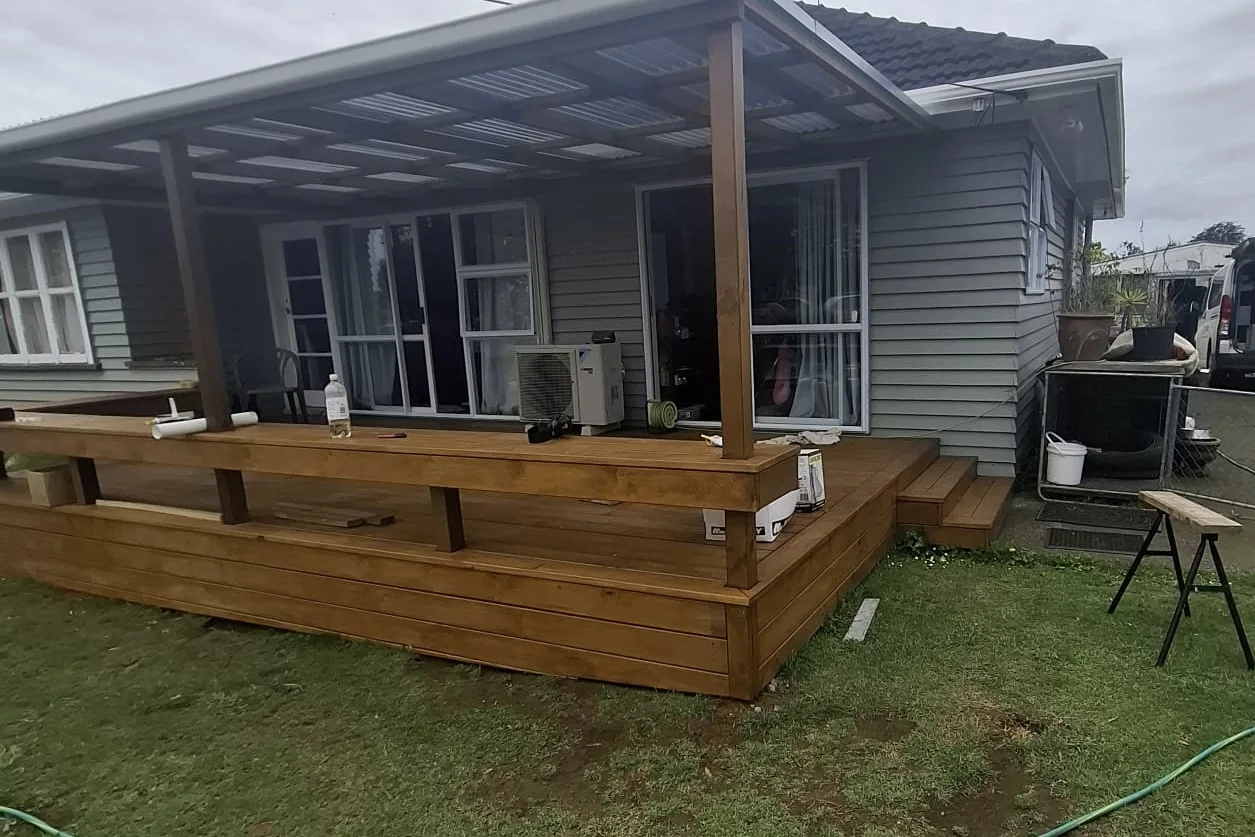
New Deck Build — Tuakau
Bare ground outside the back door — no deck, no shelter. See how it became a covered deck with built-in seating and steps.
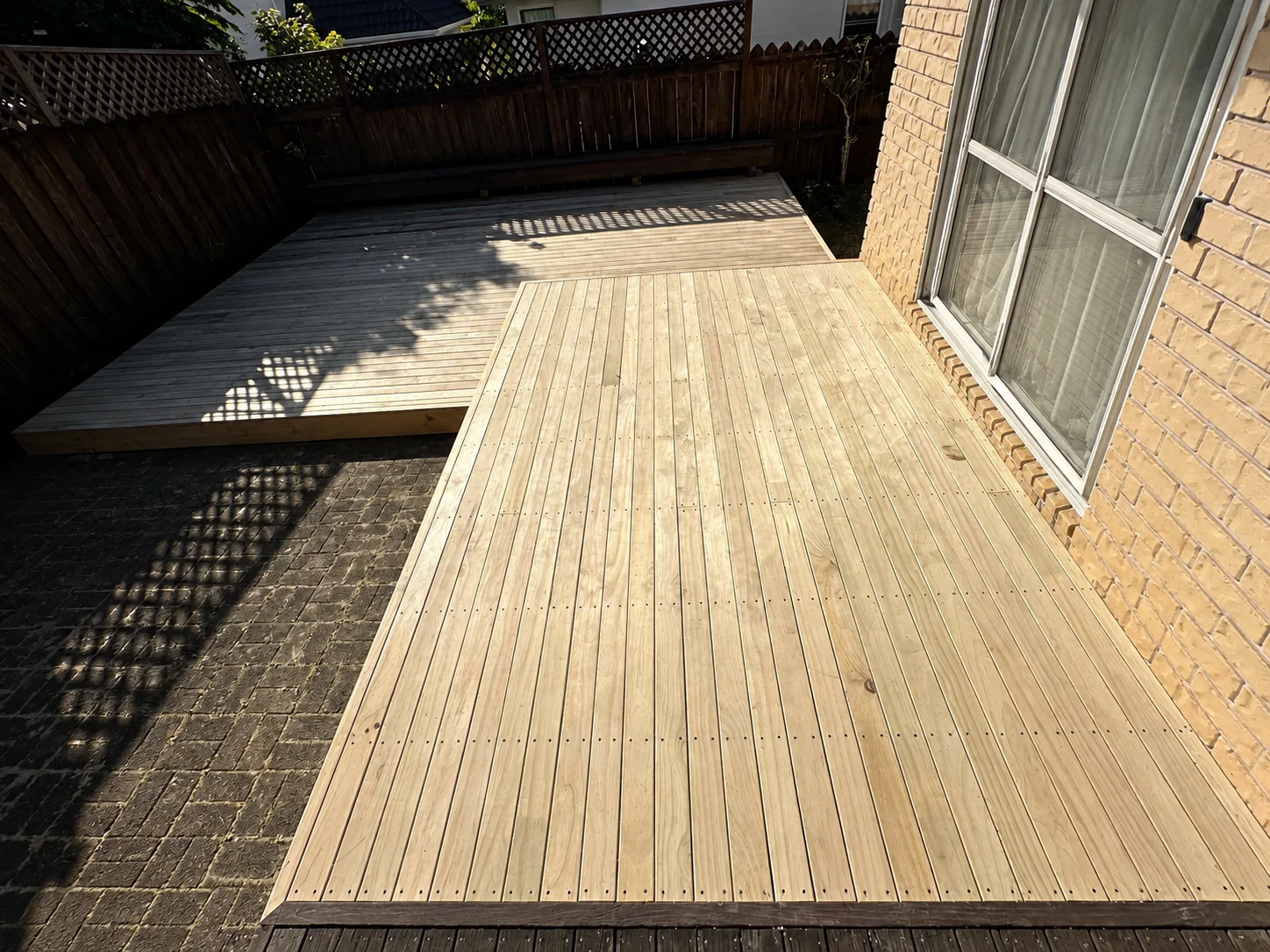
Timber Decking Replacement & Subframe Repairs — Botany
Old boards came up to reveal several rotten joists underneath. See how the subframe was repaired before new decking went on.
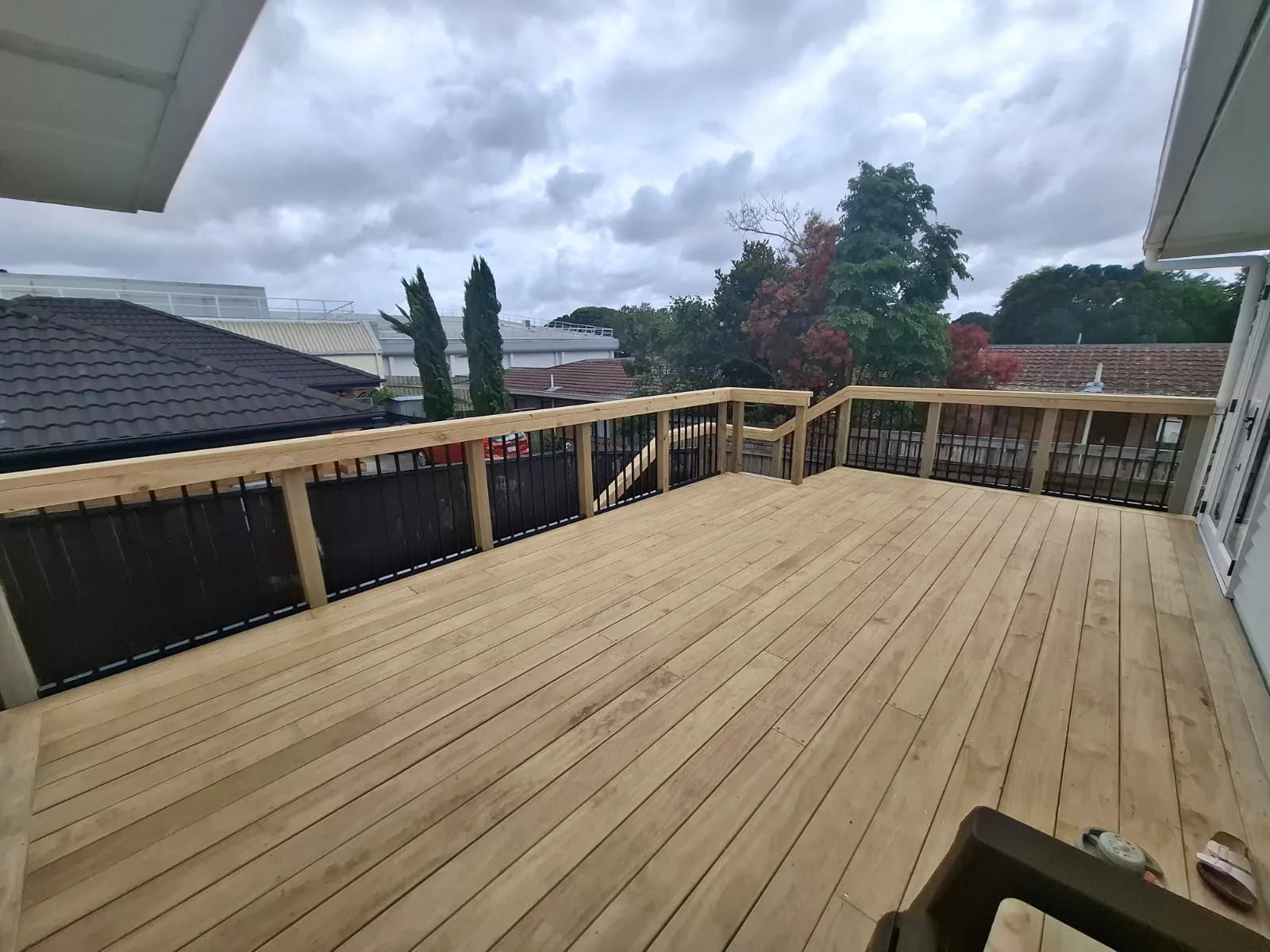
Deck Replacement — Pukekohe
An old weathered deck well past patching up. See how it became a wider deck with new steps and balustrade.
What Customers Say
"Prompt communication and quick response. Arrived on the same day we requested the service. We are happy with the works and make our life easier."
Eric Y."Very friendly and efficient, great rates. I was in a right pickle and these guys really helped at very short notice. I highly recommend Handyman Botany!"
David W.Decking Across East Auckland
Decking FAQ
Can you build a completely new timber deck?
Yes. Where suitable for the property and scope, we can undertake timber framing, decking installation and finishing details.
Can you replace only damaged deck boards?
Yes, provided the supporting structure beneath them remains suitable. The existing deck should be assessed first.
Why are gaps needed between decking boards?
Consistent spacing helps provide a neat appearance and allows water to move between boards rather than collecting on the surface.
Why do you pre-drill some screw holes?
Pre-drilling can be useful close to the end of a timber board, where driving a fixing directly in may increase the chance of splitting.
Can an old grey deck be restored instead of replaced?
Sometimes. The important question is whether the timber and supporting structure remain sound — weathered appearance alone doesn't necessarily mean it needs replacing.
Can I send photos for a decking quote?
Yes. Send photos showing the complete area, any existing deck or framing, and close-ups of damaged sections. Approximate measurements help too. And if the job is a five-minute one, ring Rinat on 021 022 66991 instead, describe it, and ask for a price for that exact work — the call is free.
Request a Decking Quote
Three details are enough. We’ll call or message to discuss the rest.
Thanks — your request has been sent.
Rinat will call or message to discuss the job and cost.