
Where Can a Shower Grab Rail Actually Go?
Not Always Where You Want It
A Half Moon Bay client rang with a few days' notice — a relative was being discharged from hospital and the shower had nothing to hold on to. The wall she had in mind turned out to be the one wall it couldn't go on.
A grab rail is unlike almost anything else you screw to a wall. A shelf is loaded gently and constantly. A grab rail is loaded suddenly, hard, and only at the one moment it matters — when somebody's foot has already gone. It spends years doing nothing and then has to take a person's whole weight without warning.
Which is why the question is never "where would you like it" on its own. It is "where would you like it, and what is behind the wall there".
Ask First, Drill Later
The first job on site was not a tool, it was a conversation. Where a rail goes is personal: it depends on height, on which side someone steadies themselves, on where the hand reaches on the way in and on the way back up. The person who will use it decides that, not the person fitting it.
Then the stud finder comes out, and that is where this job changed. Behind the wall she had chosen there was nothing — lining, and air. A rail fixed to plasterboard alone will feel completely solid when you push on it at waist height in a dry bathroom. It will not be solid when somebody's full weight arrives on it sideways.
When the Wall Says No
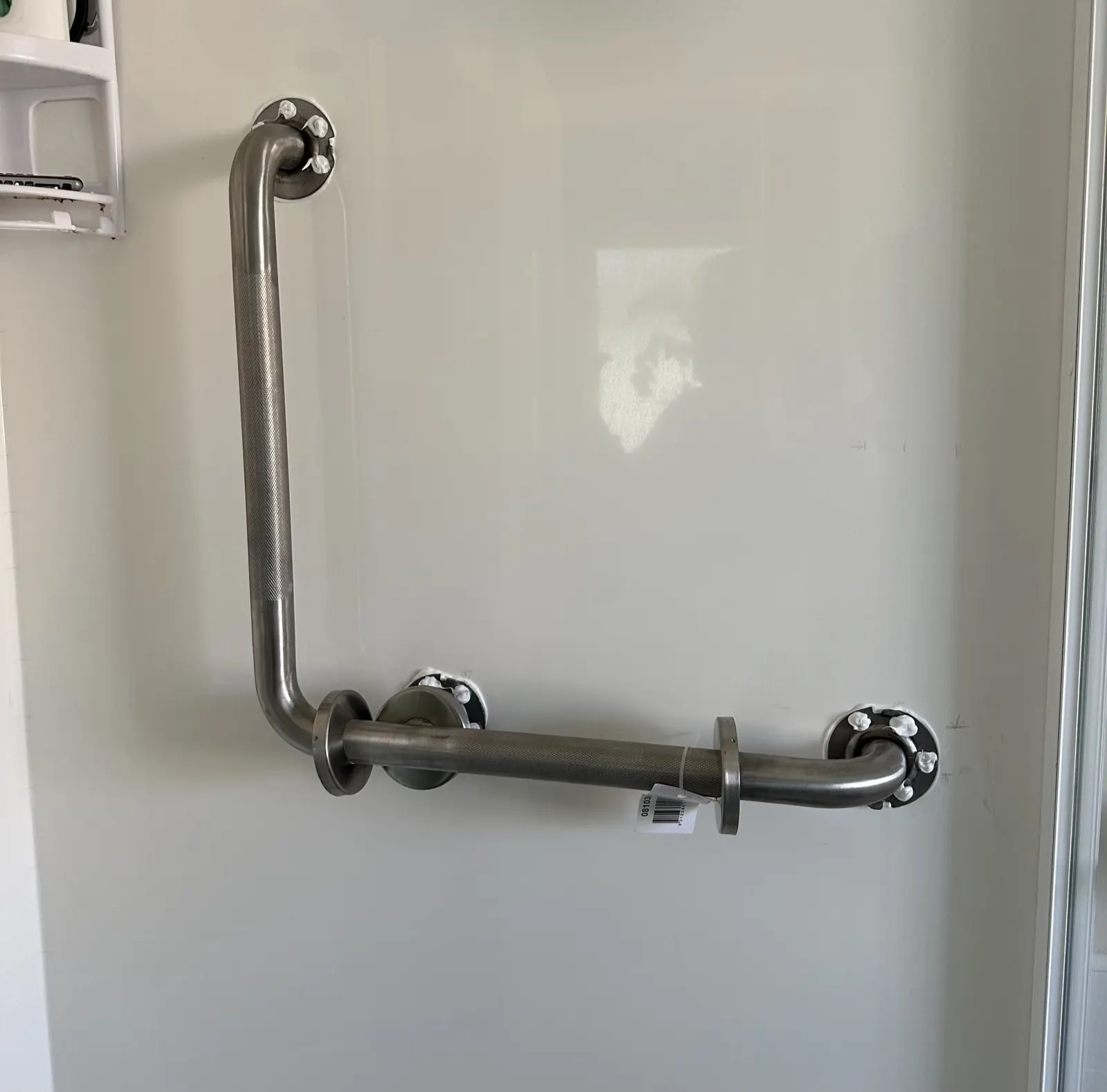
The opposite wall had solid framing behind it. So the honest answer was that the rail had to move, and the useful thing was explaining why rather than just doing it — once she understood that the first wall could not hold a person, the new position was an easy yes.
If neither wall works, there is still an option: a timber backing board fitted behind the lining, which lets the rail go exactly where it is wanted. That only makes sense while the wall is open or being relined, so it is worth asking about if a bathroom is already being worked on.
Seal Before You Screw, Not After
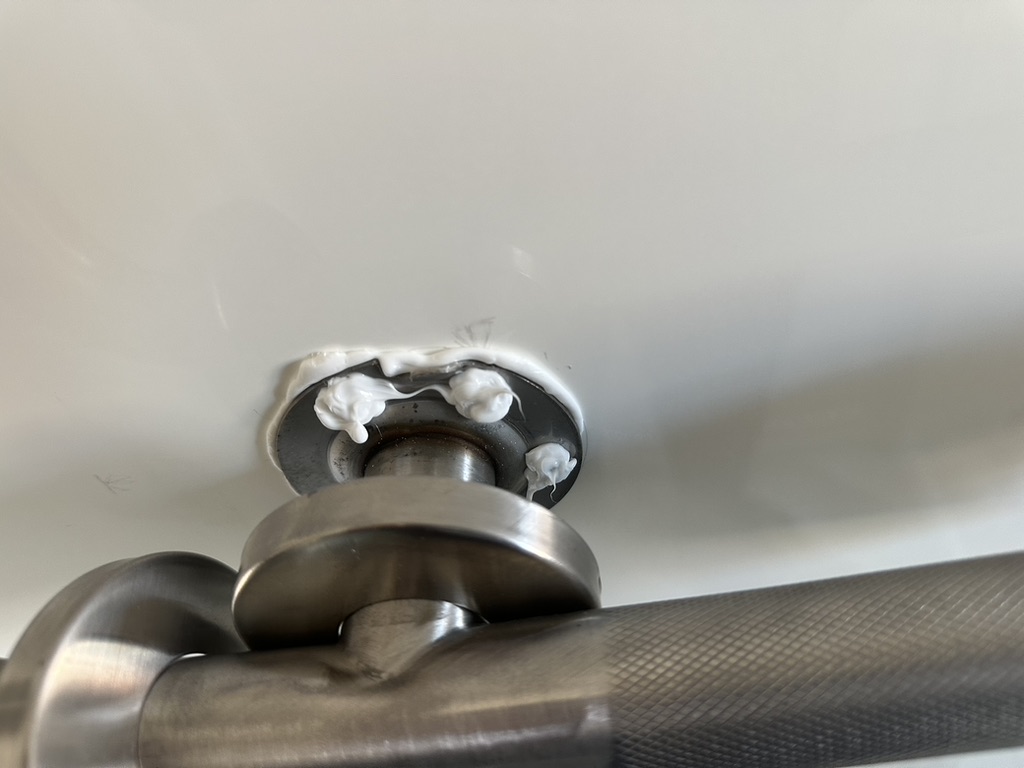
Four flanges means four sets of screw holes in a wall that gets soaked every day. Running a bead around the outside afterwards looks tidy and does half the job: the water's way in is the holes themselves. So the silicone goes on the flange and into the holes first, and the screws push through it — the seal ends up where the water would actually travel.
Skip that and nothing happens for a year or two. Then the lining behind the rail goes soft, and the fixing that was holding fine starts to let go from the inside, which is the failure nobody sees coming.
If There's a Discharge Date, Say So
This one had a date attached, which is common with grab rails — the need usually arrives with a hospital discharge, not gradually. The fitting itself is a morning. What takes the time is choosing the rail and getting someone there before the day arrives, so it is worth saying on the phone that there is a deadline.
Three hours, $500 — the rail, the silicone, the fitting and the sealing, with twelve months on the job.
See the Full Job
Both photos from this Half Moon Bay grab rail, with the price, the hours and the guarantee.
View the Project →You May Also Need
Need a Grab Rail Before Someone Comes Home?
Tell us the date and send a photo of the shower — we'll work to it.
Request a Grab Rail Quote
Three details are enough. We’ll call or message to discuss the rest.
Thanks — your request has been sent.
Rinat will call or message to discuss the job and cost.