
Why Does a Heavy Picture Pull Out of the Wall?
And What to Do Instead of Hanging It
A cast relief panel in Shelly Park weighed somewhere between 8 and 10kg and had nothing on the back to hang it by. Three and a half hours and $420 later it was on the wall — held up from underneath, not hung from above.
Nothing dramatic happens when a heavy picture fails. It does not come off the wall one afternoon. It goes crooked. You straighten it, and a month later it is crooked again, and the next time you look there is a small grey crumb of plasterboard on the skirting underneath. The fixing has been travelling the whole time.
That is what weight does to a hanging fixture. A hung load pulls in one direction and never lets go — not for a second, for years. Plasterboard is perfectly good at holding things, but it is a soft board with paper faces, and a screw in it is gripping a few millimetres of that. Under constant pull the hole slowly opens up.
The Piece That Started This One
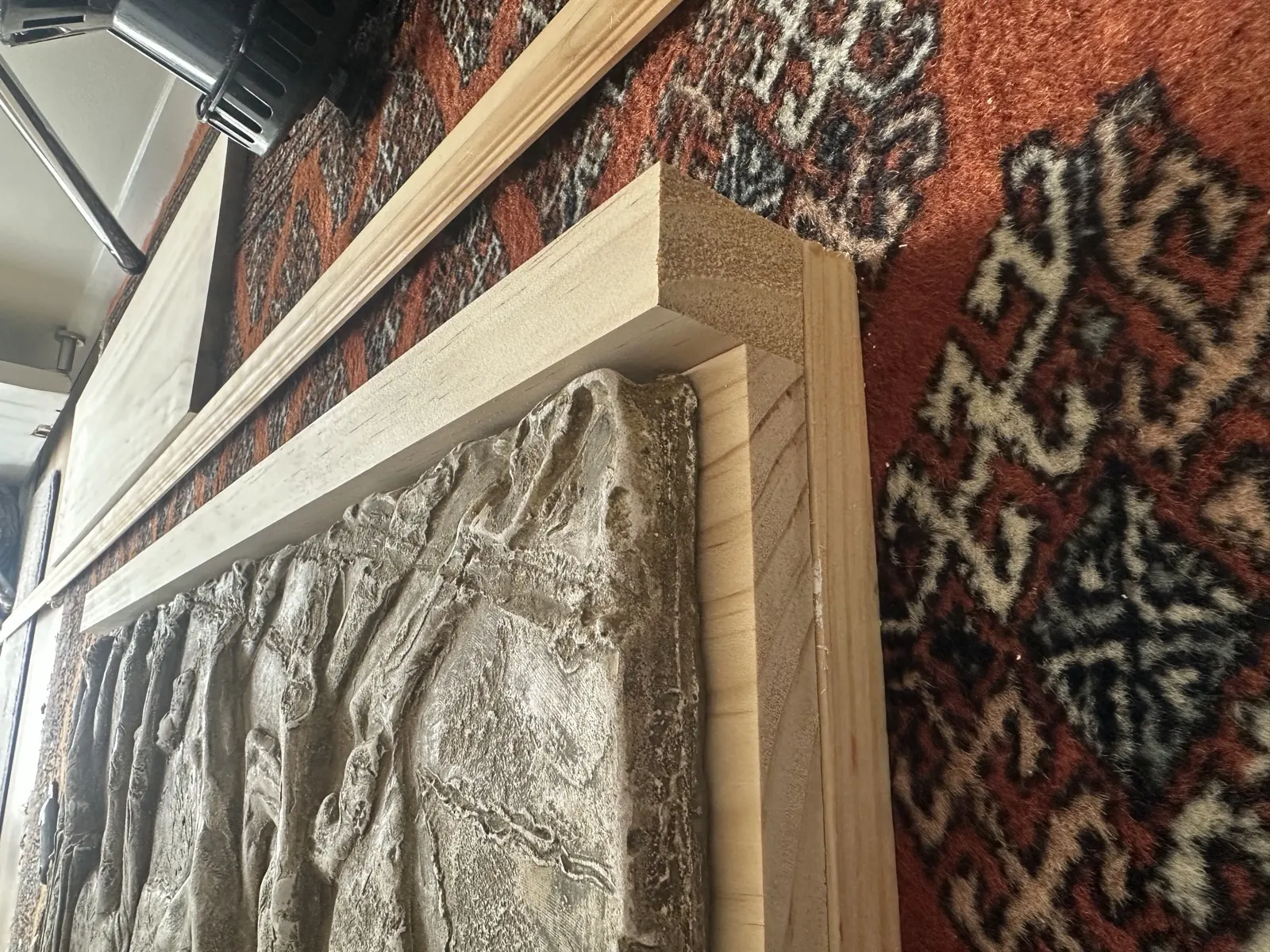
The panel in Shelly Park was a cast relief — a solid slab of eight to ten kilograms with a rough cast edge and no wire, no D-rings, nothing on the back at all. That is not unusual for a cast or stone piece. They are made to be looked at, not to be hung, and the assumption is that somebody will work out the mounting.
Hold It Up, Don't Hang It
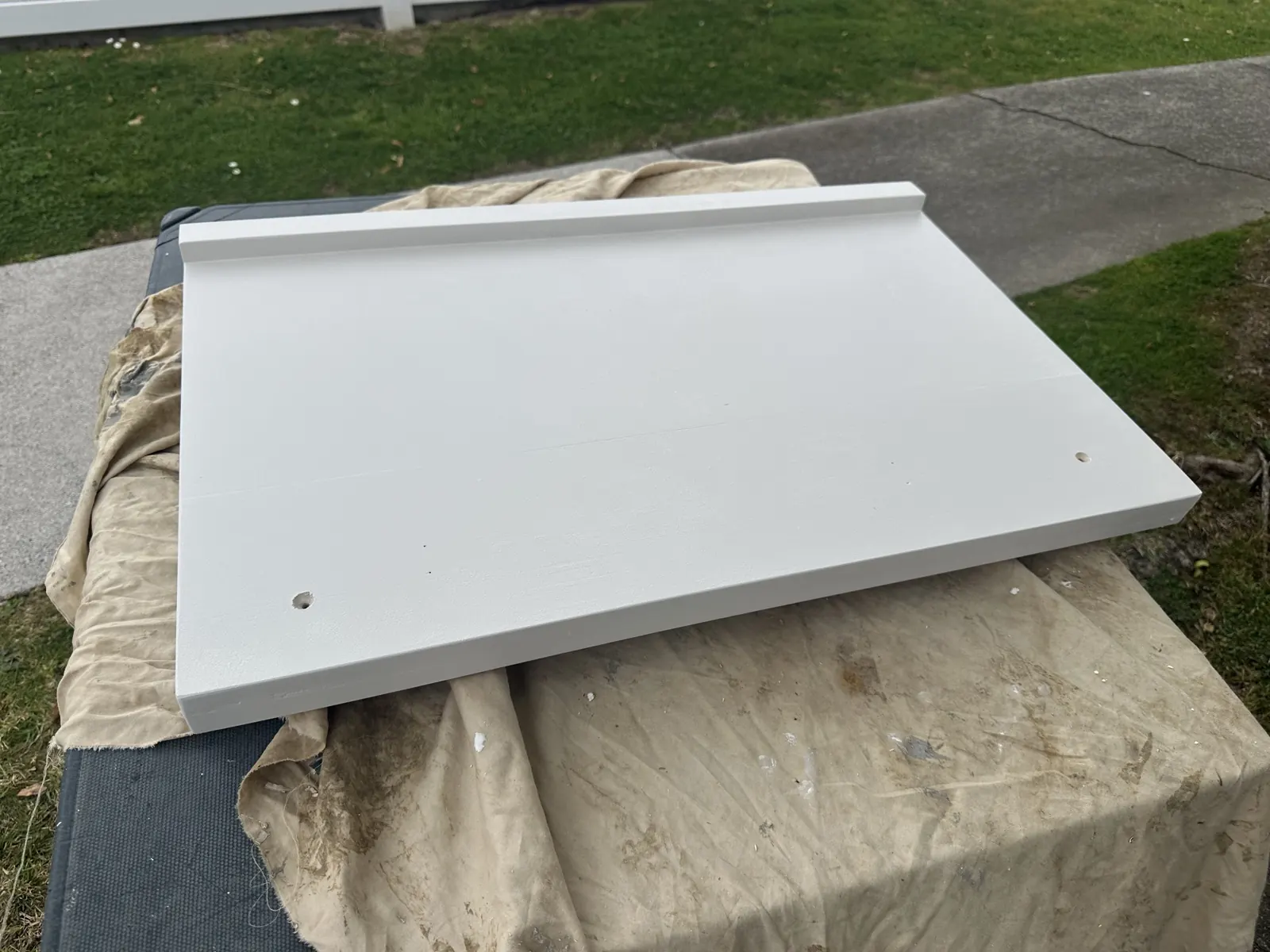
The move that solves this is simple once you have seen it: put a ledge under the piece and let it sit on it, the way a shelf carries a book. The weight then presses down through the frame and into the wall, instead of trying to lever the fixings out of it. Everything above the ledge is only keeping the piece in place, not carrying it.
Which is why this frame was built rather than bought. A shop frame is made for a print behind glass — a light thing with a neat edge. It has no way to take ten kilograms and no rebate that suits a rough cast edge. Building to the piece means the rebate matches its actual edge and the ledge is sized to what it actually weighs.
Know What Is Behind the Lining
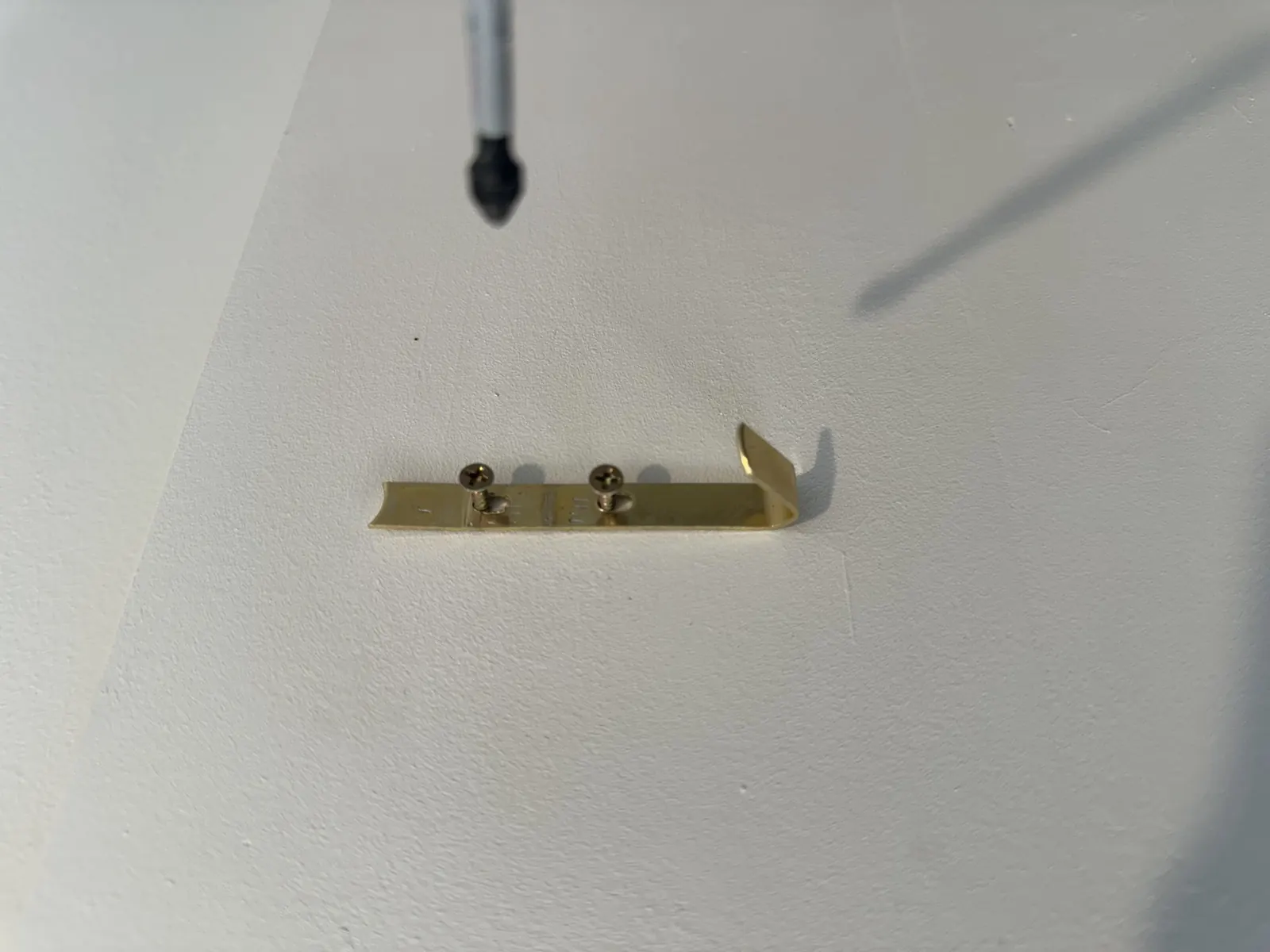
The other half of the job is the wall. Into a stud, a decent fixing will take a great deal. Into plasterboard on its own it needs an anchor rated for the load — and "rated" is worth taking literally, because the numbers on the packet assume the anchor is installed properly and the board is sound. Find the studs first; it costs a minute and it changes what you need.
Then set the fixings out and level them before anything goes on them. A heavy piece is not something you nudge into place afterwards — once it is sitting on its ledge you are not lifting it off again to move a hook by five millimetres.
Match the Paint by Number, Not by Eye
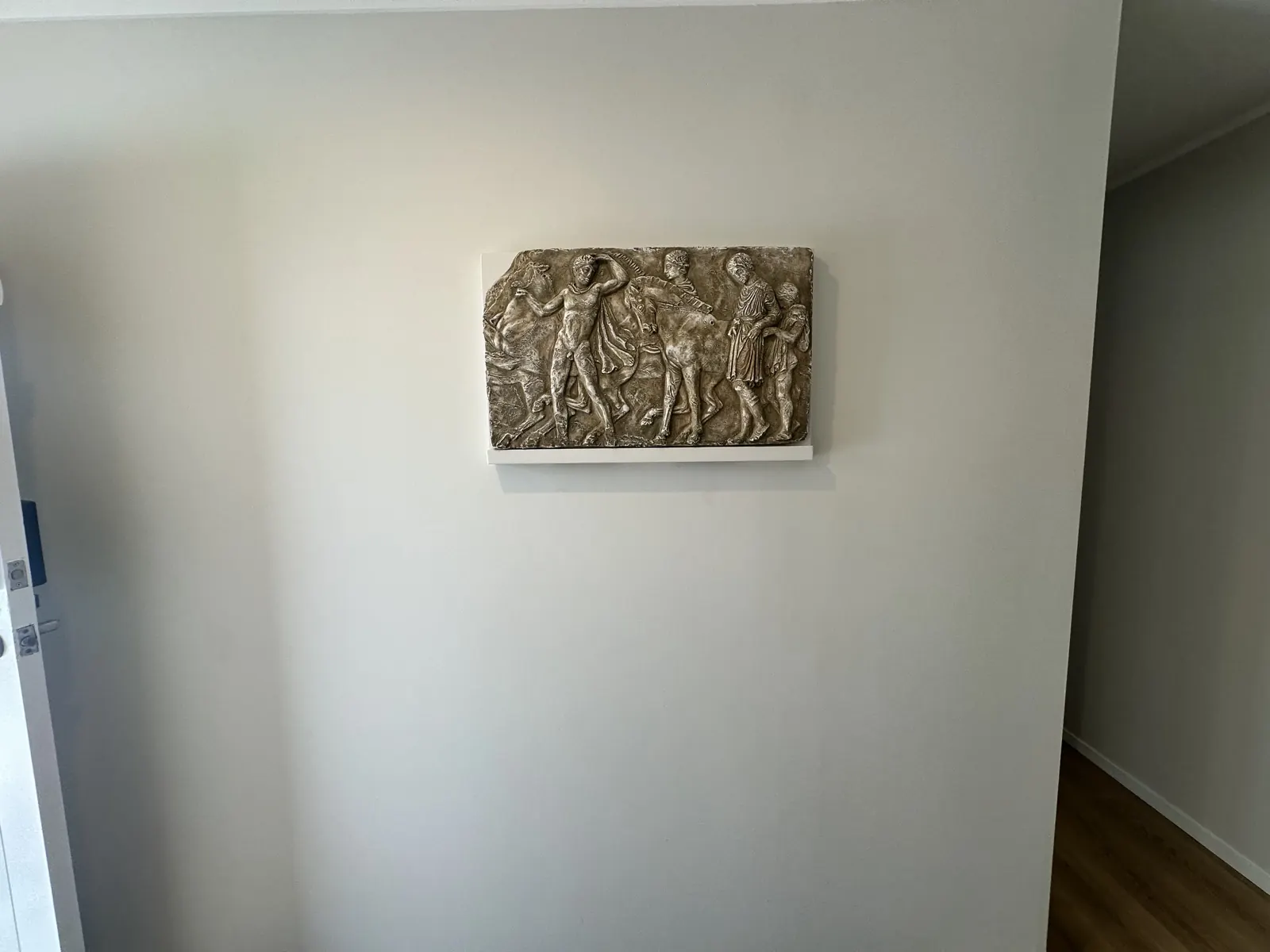
The frame was filled, primed and given two coats of Dulux mixed to the existing wall colour by number. That is worth the extra step. A frame in a near-enough white against a wall that is not quite white is the first thing anyone's eye lands on, and it makes the piece look like it is sitting on a patch. Matched properly, the frame stops registering and the casting is what you see.
What It Cost
Three and a half hours, $420 — the frame designed and built to the piece, filled, primed and painted in a matched colour, and fixed to the wall. Most of that is the making. The hanging itself is quick, once the thing you are hanging has been built to be hung.
If something heavy is already on your wall and has started sitting crooked, take it down before you straighten it again. Crooked is the warning, not the problem.
See the Full Job
All nine photos from this Shelly Park job, in the order it happened, with the price, the hours and the guarantee.
View the Project →You May Also Need
Something Heavy to Get on the Wall?
Send a photo of the piece and the wall it's going on, and we'll tell you what it needs.
Request a Picture Hanging Quote
Three details are enough. We’ll call or message to discuss the rest.
Thanks — your request has been sent.
Rinat will call or message to discuss the job and cost.