
Why Is My Window Leaking When the Flashing Is Fine?
Check the Rubber, Not Just the Roof Line
A Pakuranga Heights client had water coming in at a window, with architraves and a sill that were never dry. Everything above the window checked out sound. The leak was the seal between the glass and the frame.
When water shows up inside at a window, almost everyone looks up. That instinct is right — head flashing, facia and scribes are the usual culprits, and they are where any inspection should start. On this job they were all sound. Nothing lifted, nothing open, no track for water to run down behind the cladding.
Which leaves the window itself. And the part that fails first is the one nobody looks at: the rubber between the glass and the frame.
Rubber Shrinks, and It Shrinks at the Ends
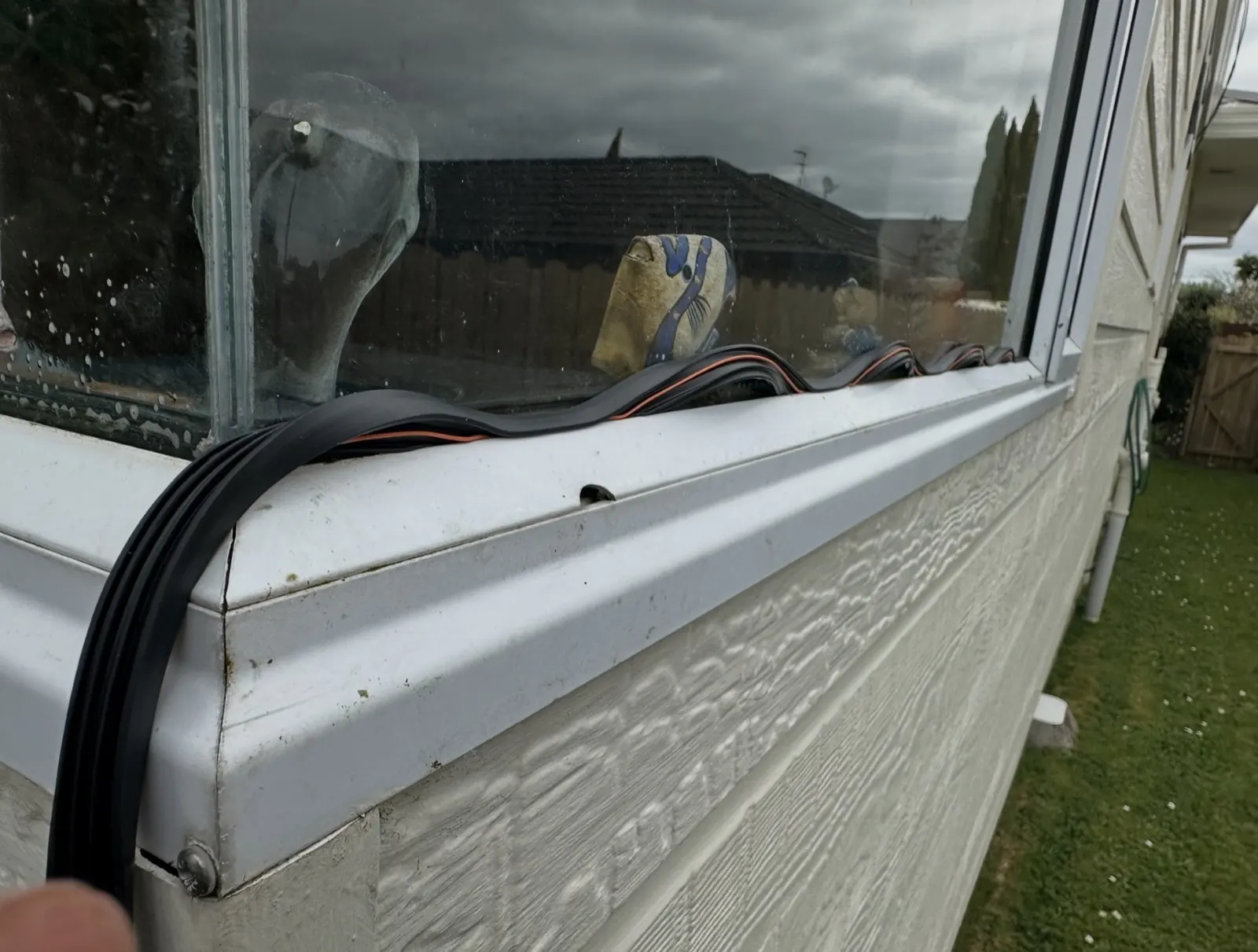
A glazing seal does not usually split in the middle. It perishes, goes hard, and shortens along its length — so the loss turns up at the two ends. Across the face of the window it still looks like a continuous black line. At the corners it has quietly pulled back.
On this window the gaps at the bottom corners were five to eight millimetres. That is a straight opening into the frame at the lowest point of the glass, which is precisely where water runs to and sits.
How to Check It Yourself
Look at the bottom two corners of the glass from outside, close up. You are looking for the rubber stopping short of the corner, or a gap you can get a fingernail into. Press it — sound rubber gives a little, perished rubber is hard and may be chalky or cracked.
If the inside of that window has damp architraves and a wet sill while the flashing above is intact, the corners are the first place to look.
Don't Silicone Over It
Running a bead of silicone along a failed seal is the common shortcut. It works for a season, it looks like a repair, and it makes the real one worse — the silicone has to come back off the glass and out of the channel before new rubber can seat, and it rarely comes off cleanly.
It also hides the symptom while the frame keeps getting wet, which is the part that costs money later.
Get the Seal From Whoever Made the Window
Glazing seals are not a single standard part. Every manufacturer's frame has its own channel and its own profile, and a rubber that is nearly right will not seat properly — it sits proud, or it does not grip, and the leak comes back.
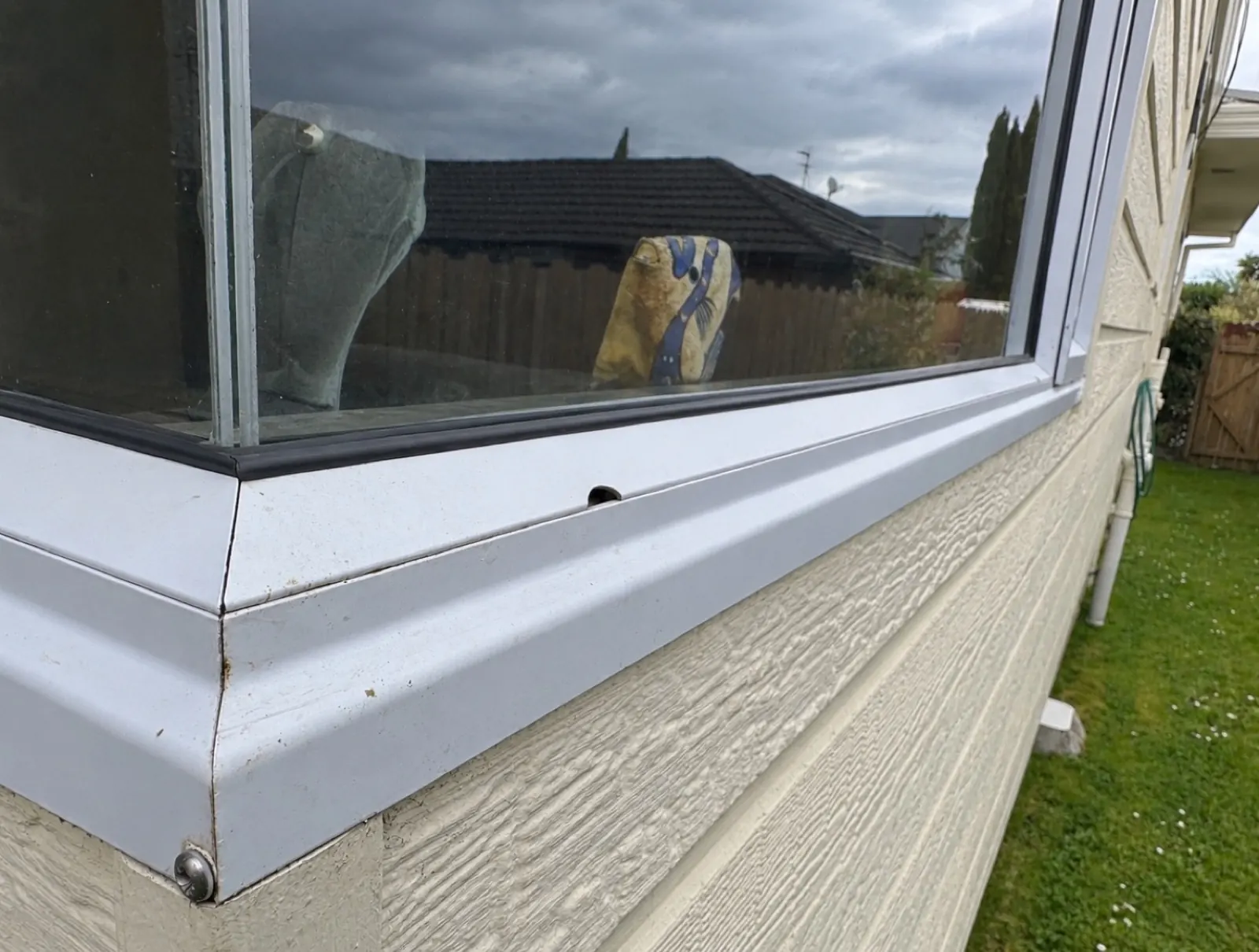
So on this job the replacement came from the company that made the windows. That is one phone call and a trip, and it is the difference between a repair that holds and one you do twice.
The Part Worth Taking Away
A window leak does not always mean cladding comes off. Check what can be inspected first — flashing, scribes, the seal, the drainage holes in the sill — and a good number of leaks turn out to be the cheapest thing on that list. Opening up a wall is what you do once those are ruled out, not before.
The leak stopped. No cladding was removed, no flashing touched, and nothing was covered over.
See the Full Repair
Both photos from this Pakuranga Heights window, and what was checked before the seal was found. There's a drag-to-compare version on the Odd Jobs page too.
View the Project →You May Also Need
Wet Sill or Damp Architraves?
Send a photo of the window inside and out, and we'll tell you where to look first.
Request a Window Leak Quote
Three details are enough. We’ll call or message to discuss the rest.
Thanks — your request has been sent.
Rinat will call or message to discuss the job and cost.