About This Repair
The call was about water coming inside at a window. The architraves on the inside were always damp and the sill was wet — the kind of thing people live with for a while before ringing someone.
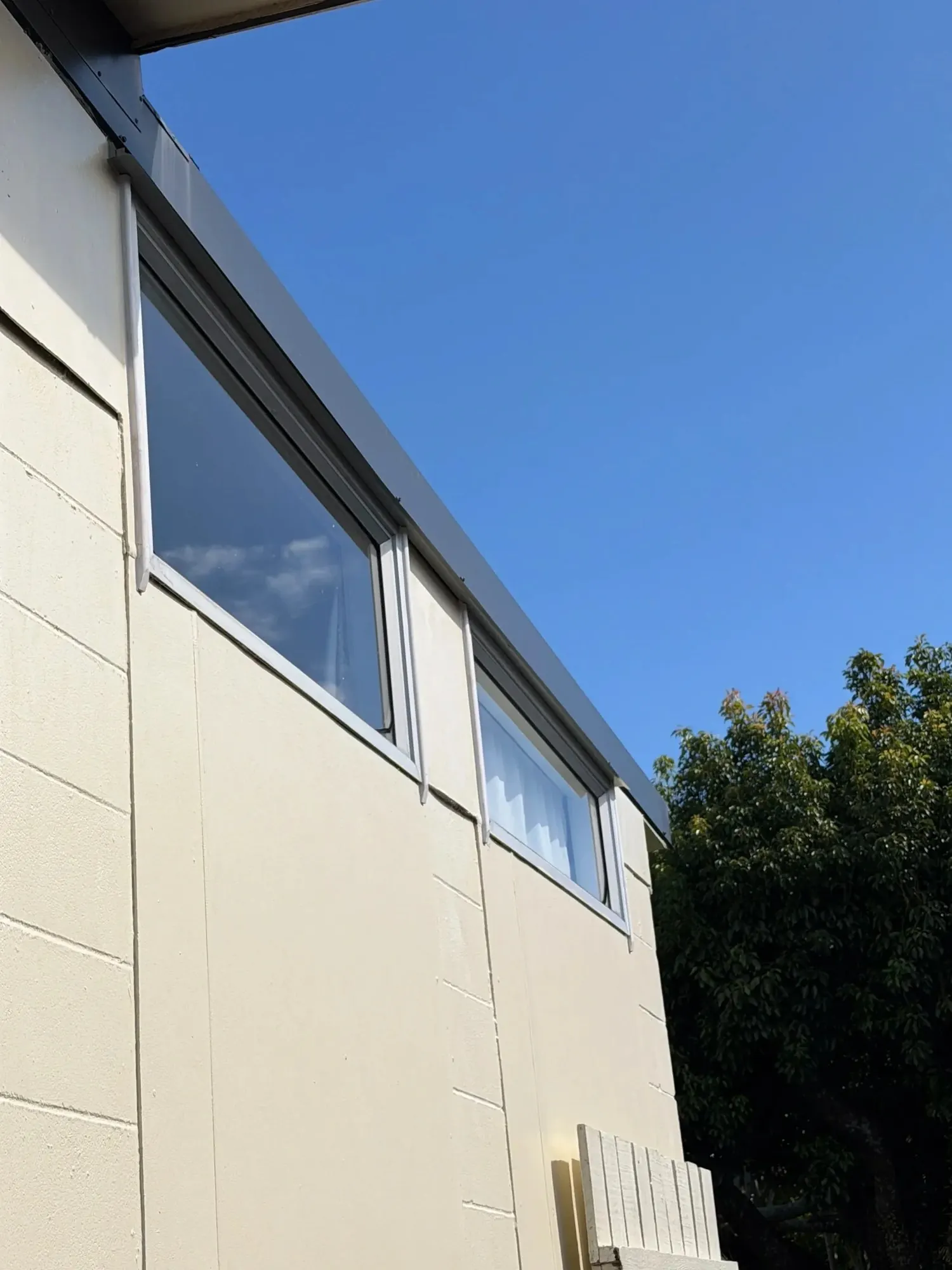
The obvious suspect with a window leak is everything above it, so that is where the inspection started: the head flashing over the window, the facia board, the scribes. All of it was sound. No gaps, no lifted flashing, nothing that would let water track down behind the cladding.
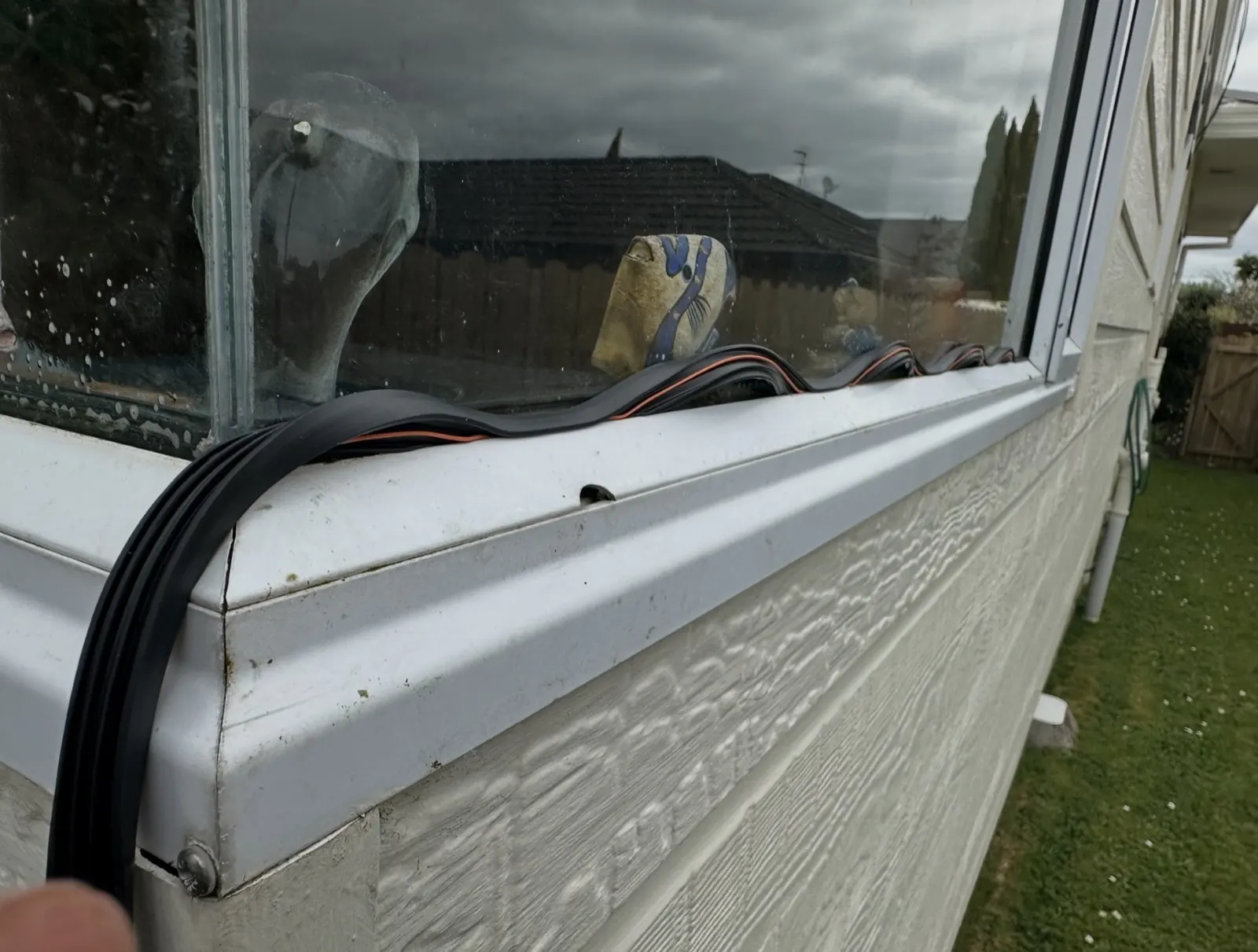
What did stand out was the rubber between the glass and the frame. It had perished and shrunk — and because rubber shrinks along its length, the shortening shows up at the ends. At the bottom corners it had pulled back far enough to leave gaps of five to eight millimetres. That is a direct opening into the frame at the lowest point of the window, which is exactly where water collects.
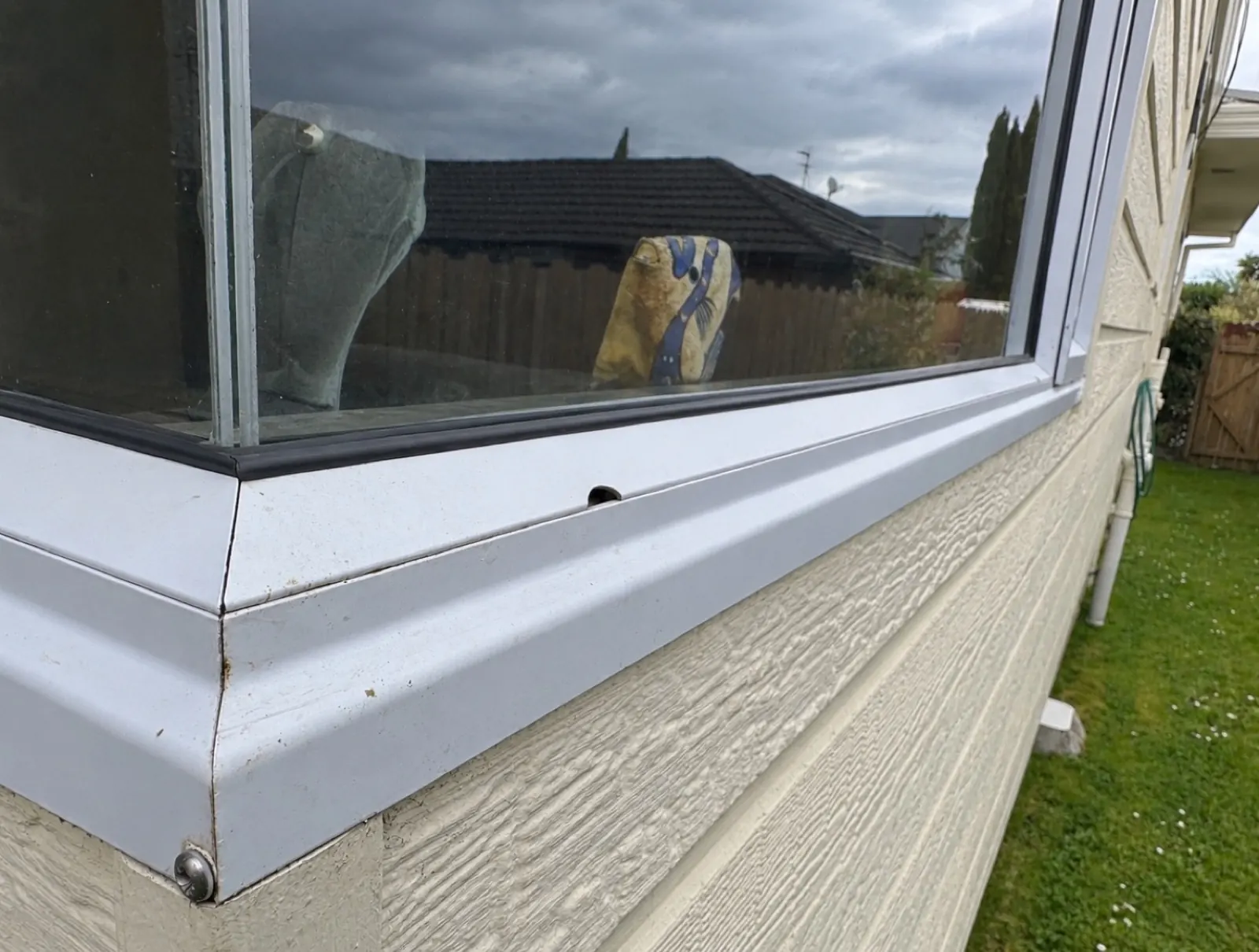
Seals are not generic. Each manufacturer's frame takes its own profile, and a near-enough rubber will not seat properly. So I went back to the company that made these windows, got the right seal from them, and fitted it.
The leak stopped. No cladding came off, no flashing was touched, and nothing was sealed over with silicone to hide it.