
Why Is Part of My Wall Soft?
What's Usually Behind It, and What It Takes to Fix
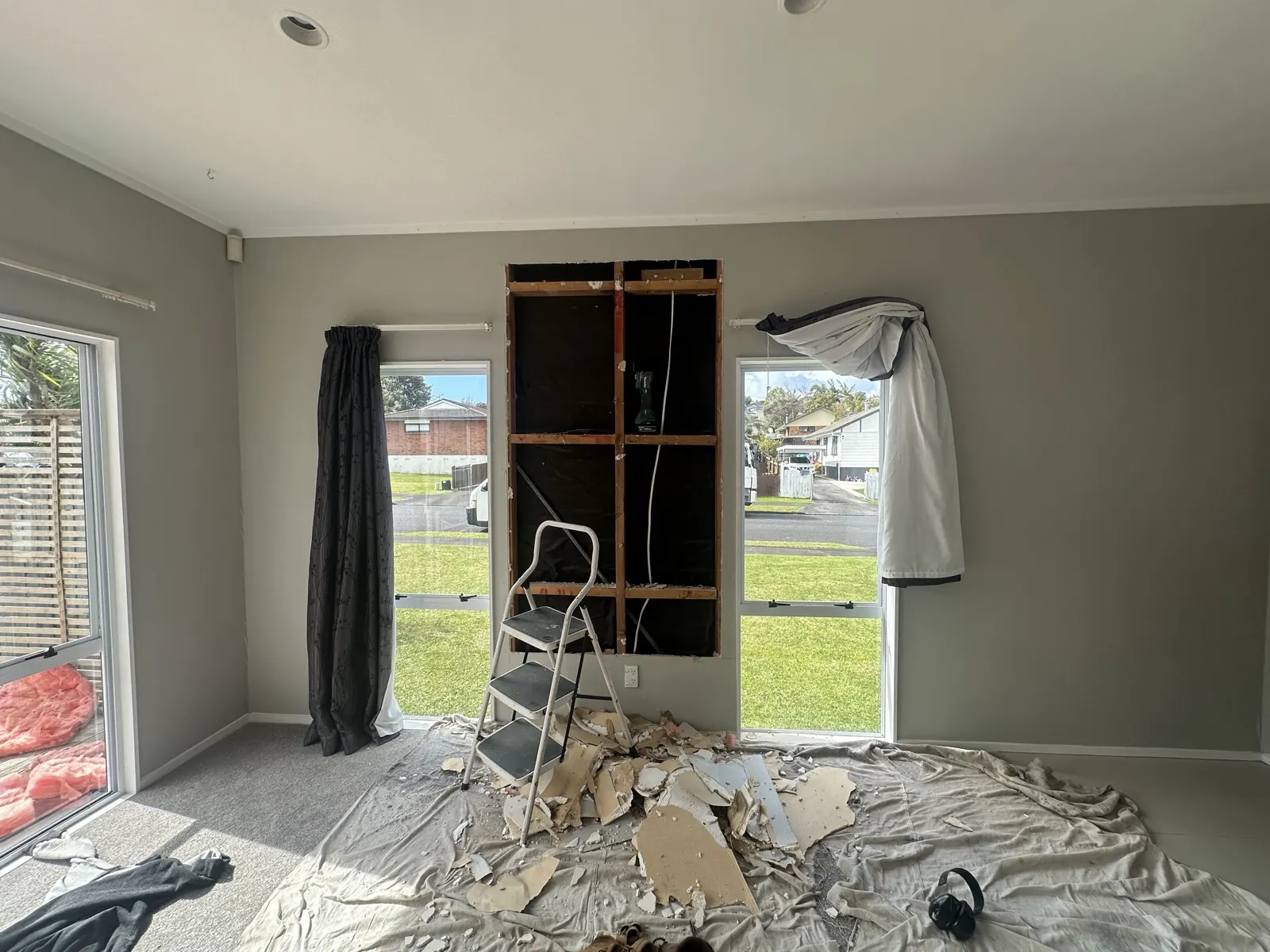
A homeowner in Highland Park noticed the wall gave slightly when pressed. The leak that caused it had already been fixed months earlier — but the damage it left behind hadn't been touched. Here's what we found once the wall came open.
Plasterboard is strong when it's dry and useless when it isn't. It's gypsum pressed between two sheets of paper, and once water soaks into it the gypsum loses its grip and the board goes spongy. So when part of a wall feels soft under your hand, that isn't the wall wearing out. It's water, and it has been there long enough to do damage.
The awkward part is that the soft patch is rarely where the water came in. Water runs down framing and along the bottom plate before it soaks into anything, so the damage shows up at the lowest point it reached — not the highest. That's why guessing at the source from the outside so often sends people to the wrong place.
Why the Wall Has to Come Open
It's tempting to cut out the soft bit, patch it, paint it and move on. The problem is you've then closed a wall you never looked inside. You don't know whether the leak is genuinely finished, how far the wet spread, or what state the framing is in.
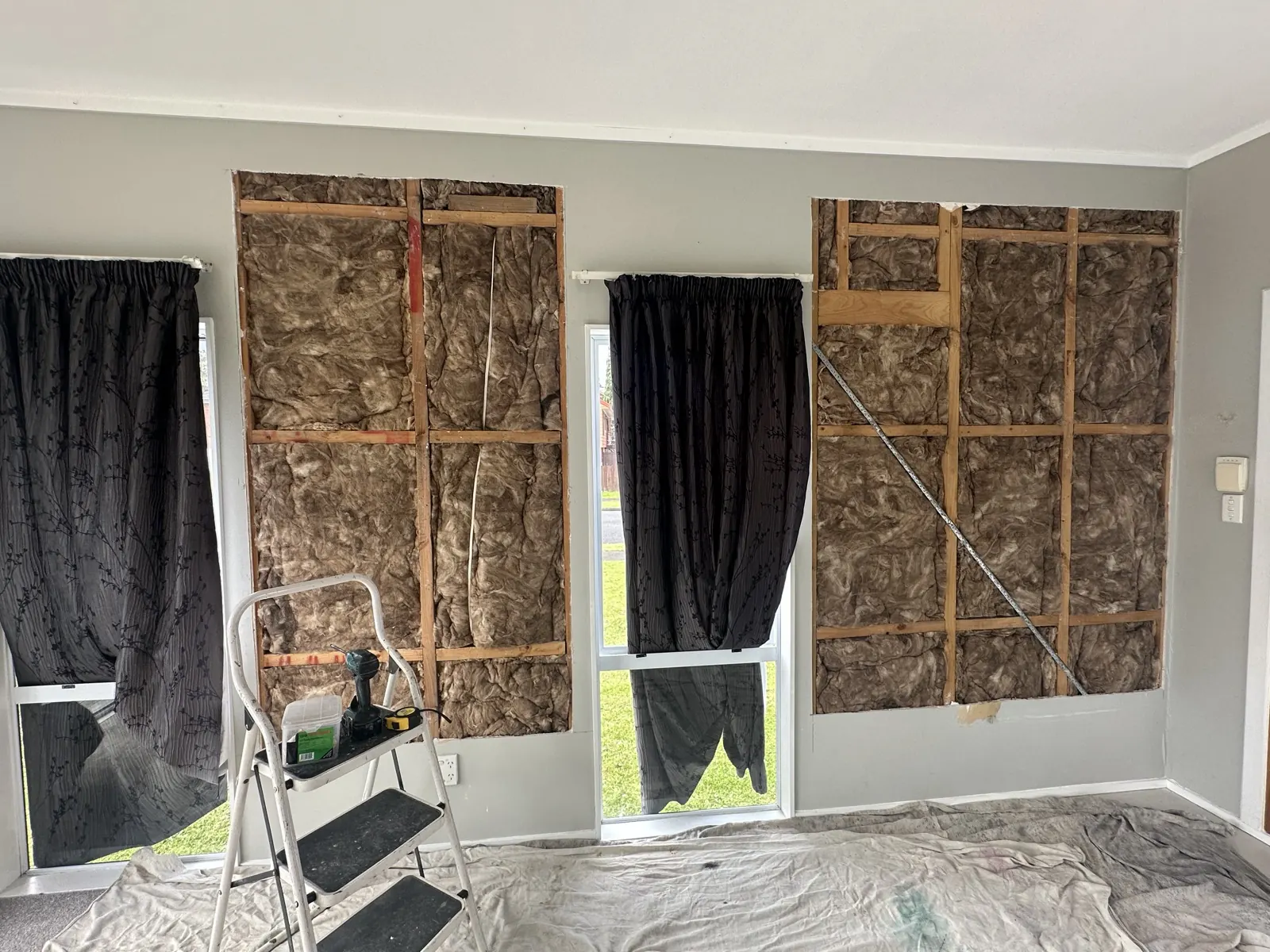
In Highland Park the leak had been repaired already, and the repair held. But the insulation in those bays had been soaked. That matters more than most people realise: batts work because they trap air, and once they've been wet they stay compressed and never fully recover. They look fine. They just don't insulate any more. Putting them back would have meant a cold wall behind a perfect-looking finish.
The Step That Gets Skipped — and Cracks Later
When you cut a section of lining out, you also cut away the edge that was fixed to framing. The new sheet then has framing on some edges and thin air on others. It will sit there and look fine — until the house moves, as every house does, and the unsupported joint opens up as a hairline crack straight through the new paint.
The fix is simple and takes minutes: add timber behind the cut lines so every edge of the new sheet has something to screw into. It's invisible in the finished job, which is exactly why it's the first thing to disappear when someone is working to the lowest possible price. If a wall repair you paid for cracked along the same line a year later, this is almost always why.
Paint the Patch, or Paint the Wall?
This is the one that decides whether the repair is visible or not, and it has nothing to do with the repair itself. Paint on a wall has been fading quietly since the day it went on. Fresh paint from the same tin, in the same colour, will not match it — you'll see a patch in certain light no matter how good the stopping underneath is.
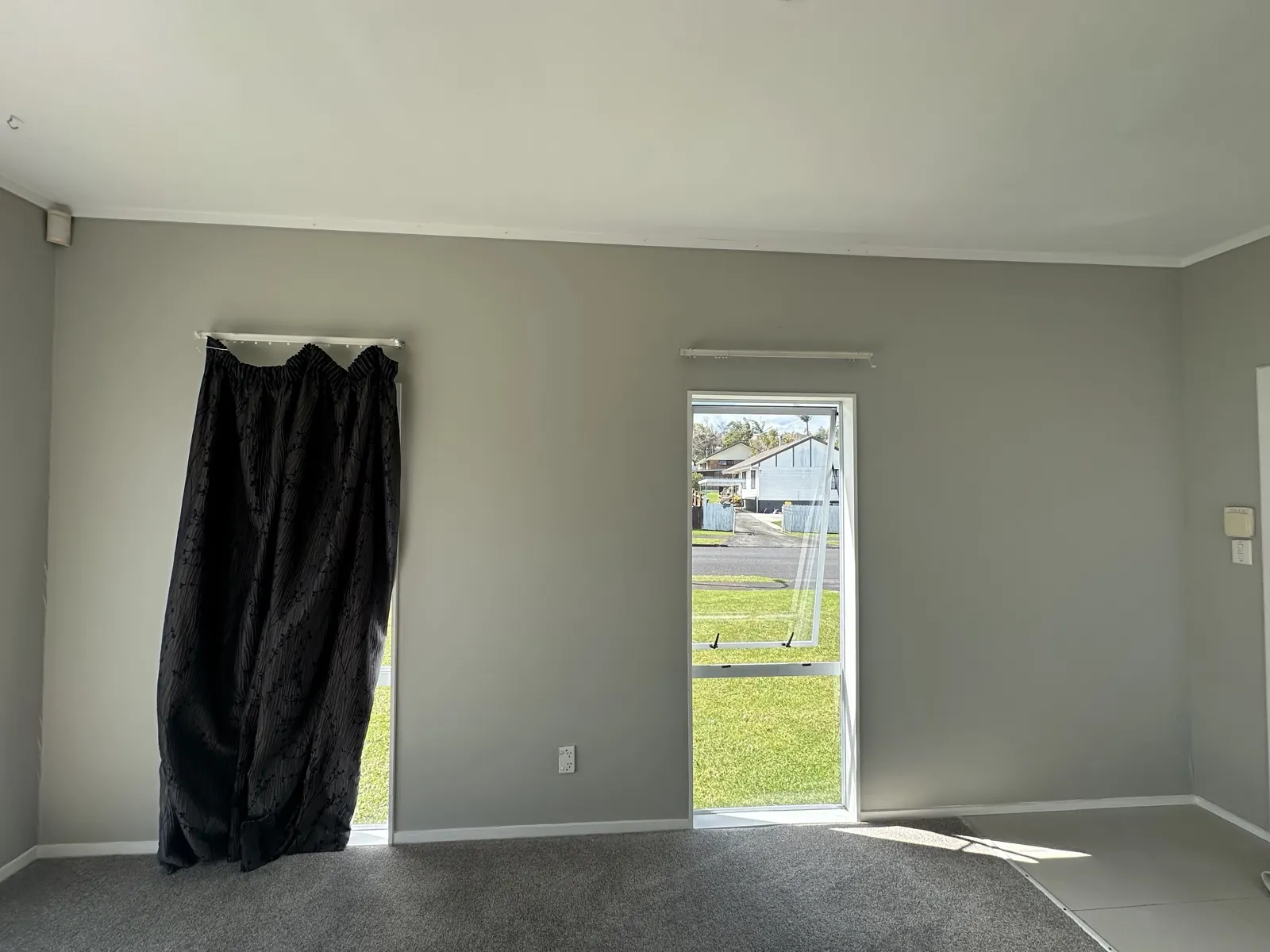
Painted corner to corner, ceiling to skirting, there's nothing to compare against and nothing to notice. That's what was done here, and it's why the finished photo shows no sign of where two large sections were cut out of the wall.
“Excellent service from Rinat / Handyman Botany. He offered a very reasonable price, replaced the wet Gib boards quickly and skillfully, and went the extra mile to fix and plaster a Gib board on a warped frame, getting it to look perfect after painting. Great communication throughout the job and excellent attention to detail. Highly recommended!”
What Changes the Price
Almost entirely one thing: whether the wall is still wet. This one was dry, the leak was already sorted, and the whole job ran in a single eight-hour visit for $1,800 including materials, labour and rubbish removal.
A wall that's still wet is a different job. It gets opened, the leak gets dealt with, and then it has to be left alone to dry properly before anything is closed back in. That's more than one visit, and there's no shortcut — sealing damp framing behind new lining is how you end up paying for the same wall twice.
If You Want to Keep the Cost Down
You can buy the plasterboard, insulation and paint yourself and pay only for the labour — just say so before the job starts so nothing gets bought twice. And if you've done this kind of work before, it's within reach as a weekend job. The two parts that catch people out are the extra framing above, and getting the stopping flat enough that the join disappears once paint goes over it.
The one thing worth not putting off is looking. A soft patch doesn't dry out and get better on its own, and everything behind it — framing, insulation, the lining next to it — only gets worse while it waits.
See the Full Repair
The opened wall, the new insulation and the finished result — every photo from this Highland Park job, with the price, the hours and the guarantee.
View the Project →You May Also Need
Found a Soft Patch?
Send a photo and we'll tell you what we think is behind it — no obligation, no pressure.
Request a Wall Repair Quote
Three details are enough. We’ll call or message to discuss the rest.
Thanks — your request has been sent.
Rinat will call or message to discuss the job and cost.