About This Wall Repair
The owner noticed that parts of the wall had gone soft. That is almost always water: a leak somewhere behind the lining that has been soaking into the plasterboard, sometimes for a long time before anything shows on the surface. The leak itself had already been dealt with, but the damage it left behind had not.
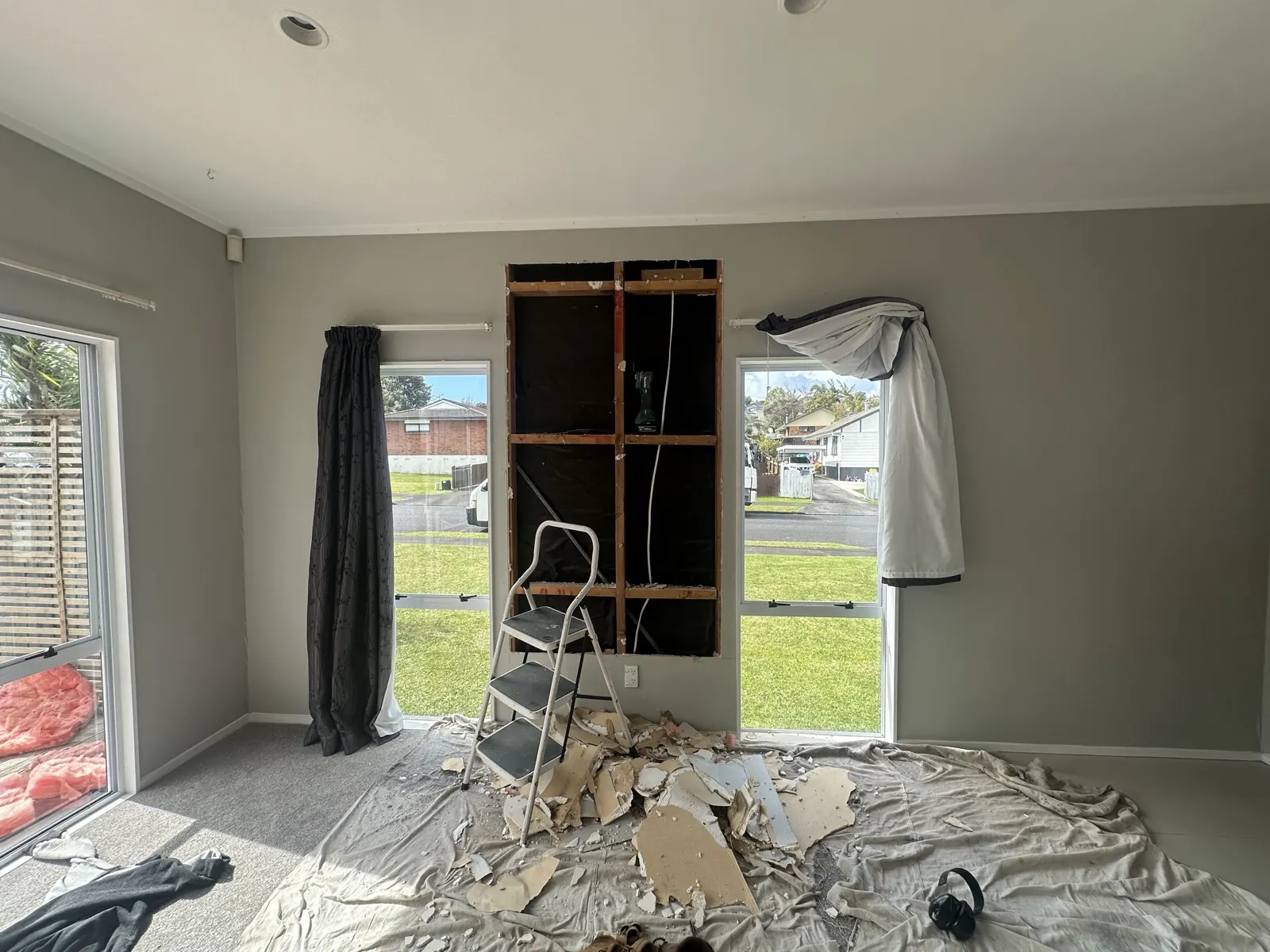
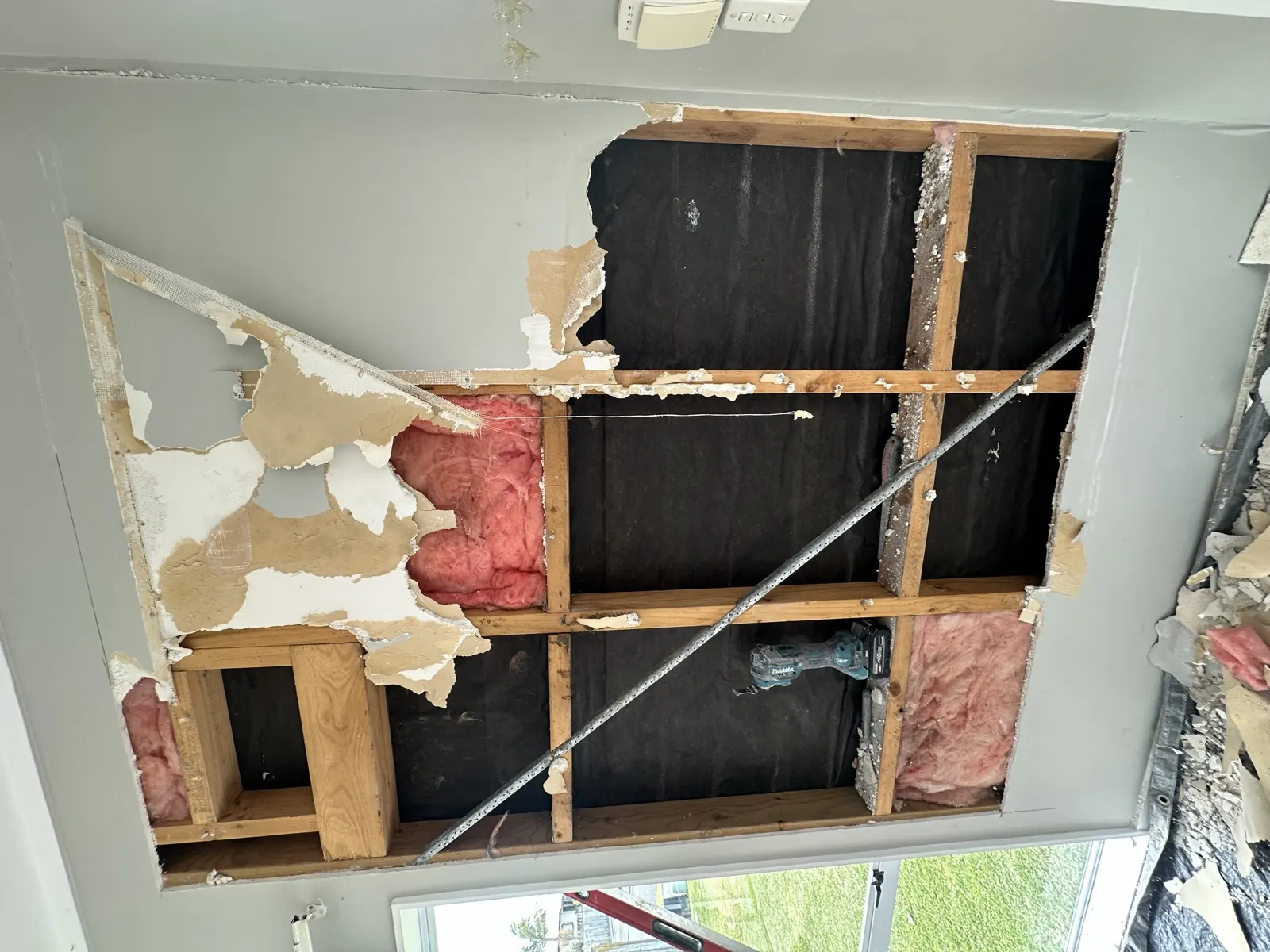
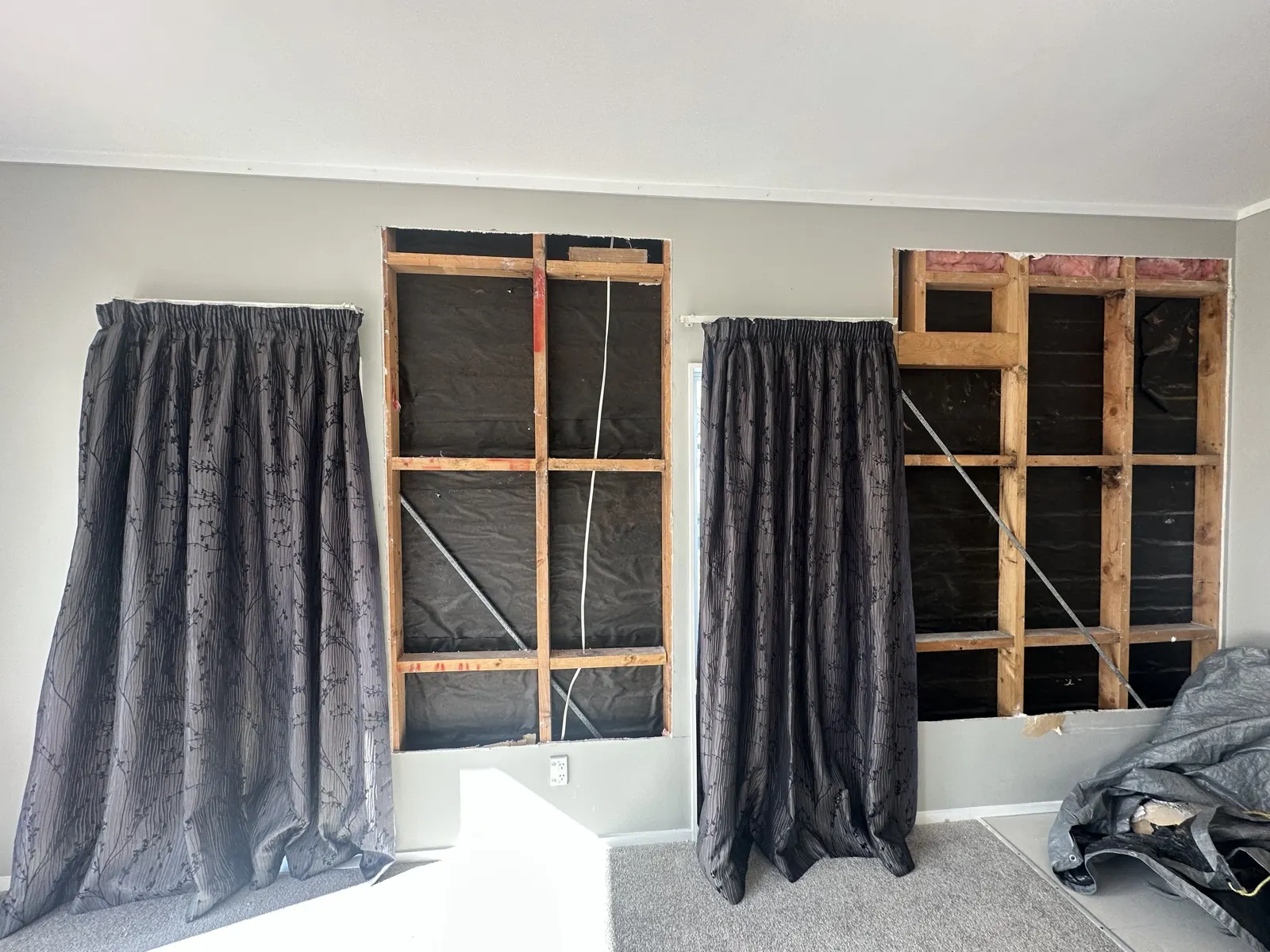
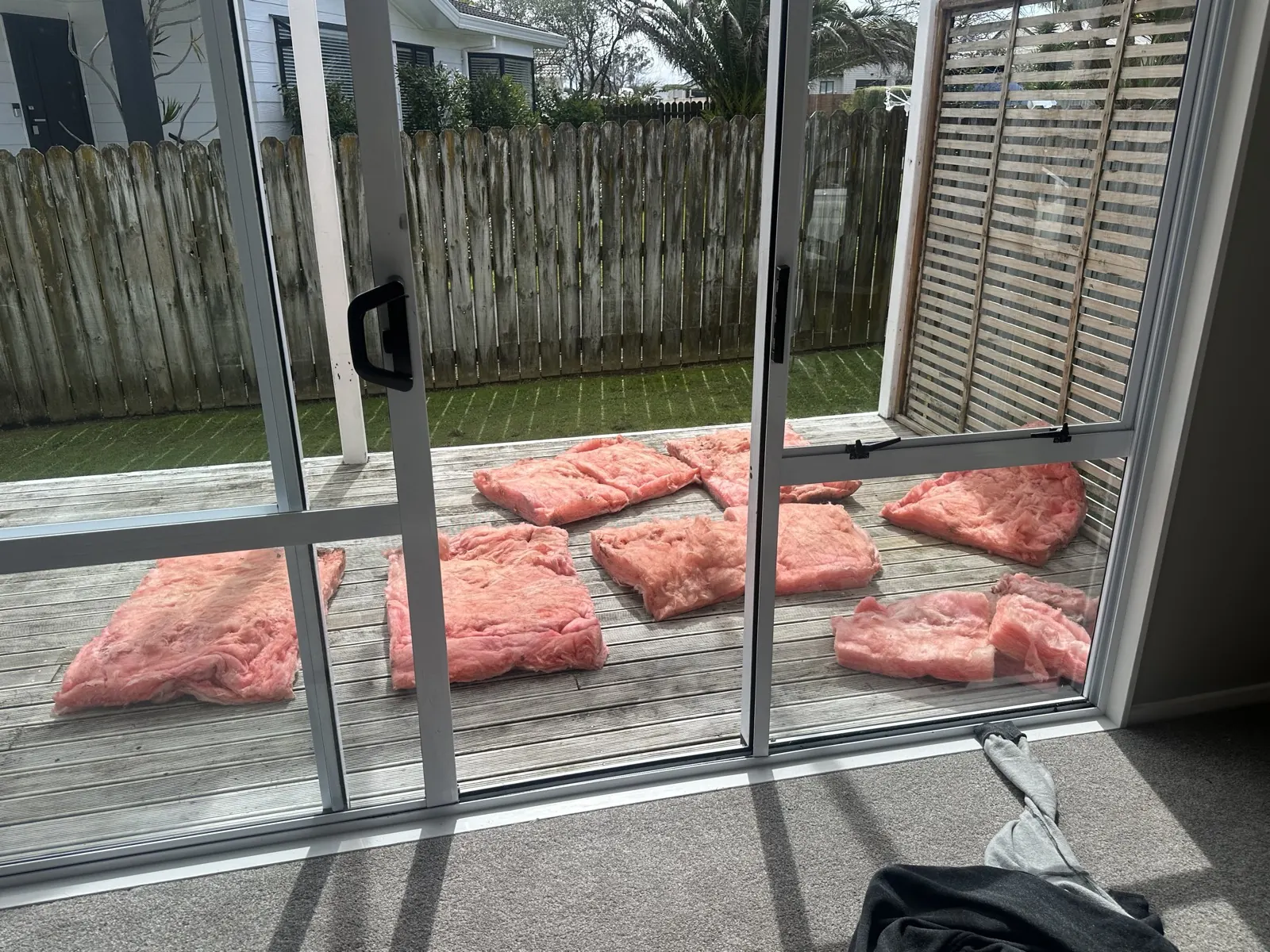
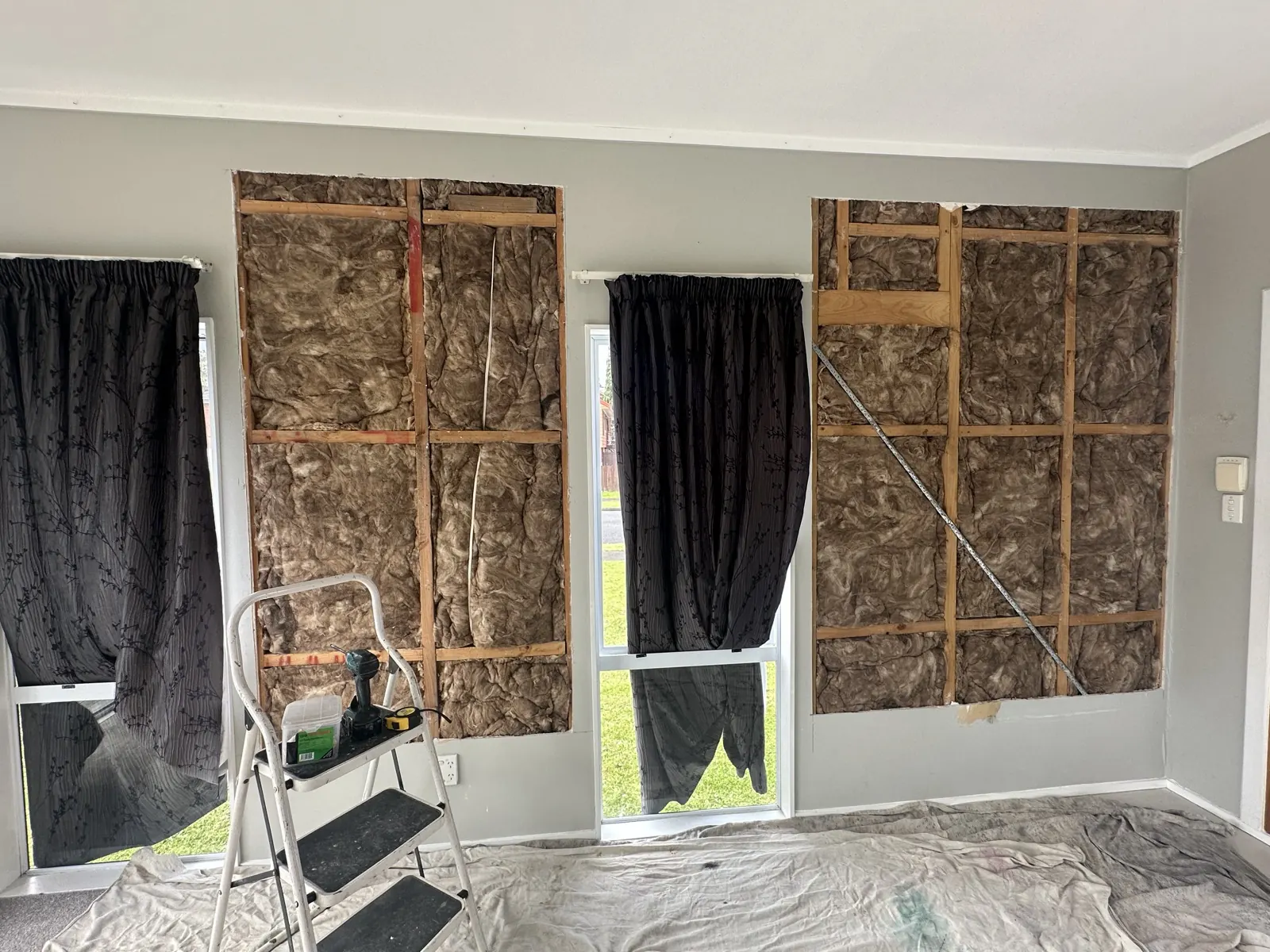
There is no way to know how far it spread without opening up. Two sections of lining were cut out, which showed how much had been affected and let the source be checked properly. The old insulation in those bays had been wet and was pulled out — once batts have been soaked they stay compressed and stop holding heat, so putting them back would have been pointless.
Cutting a wall open also removes the framing the old sheets were fixed to along the cut lines, so extra timber was added to give the new sheets a solid fixing point on every edge. Without that the joints move, and moving joints crack later no matter how well they are stopped. New insulation went in, then the new lining.
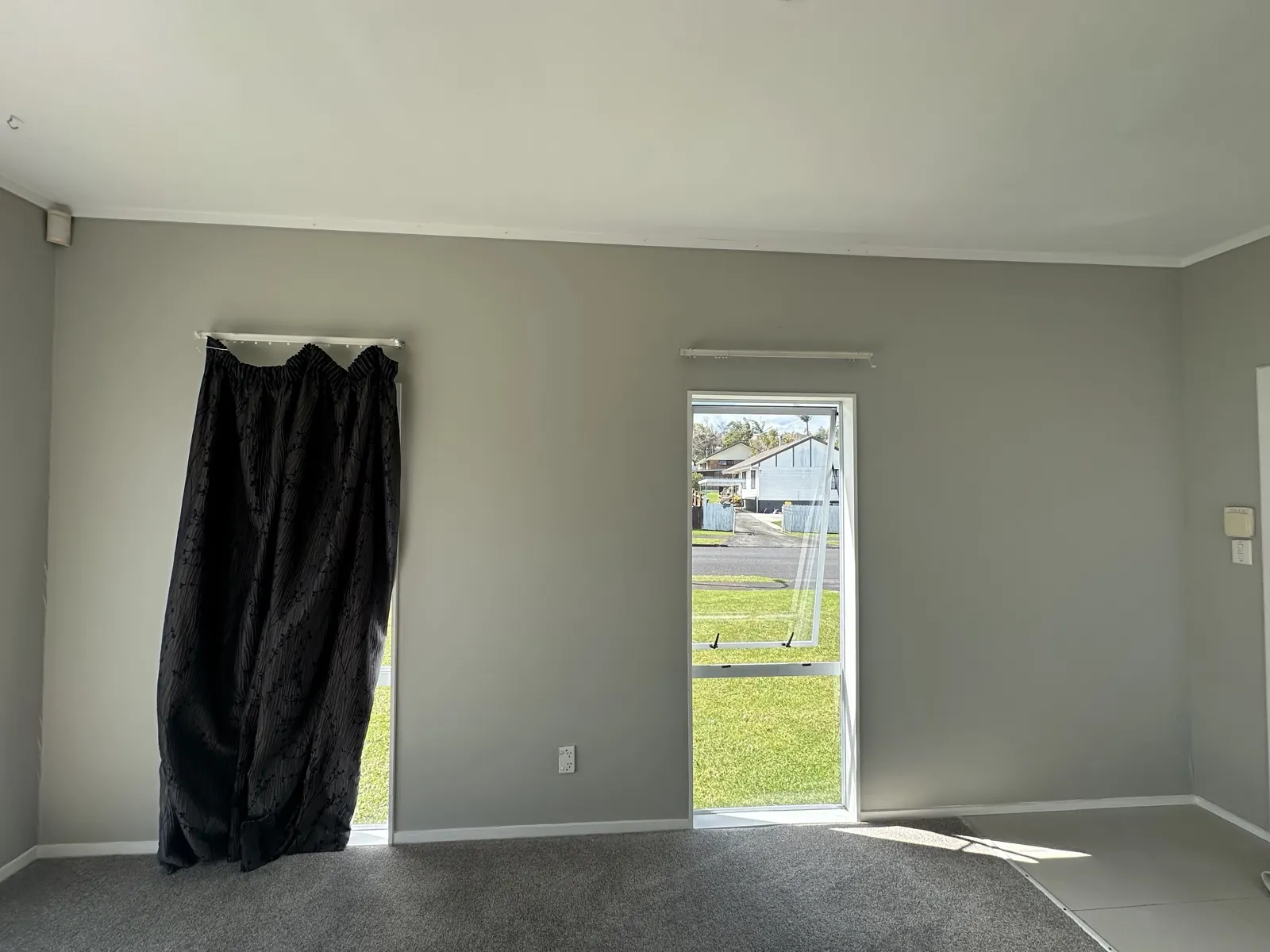
The stopping and painting were done by a painter on the team. The whole wall was painted rather than just the repaired sections — see the FAQ below for why that matters more than most people expect. Start to finish, the job took eight hours.