About This Job
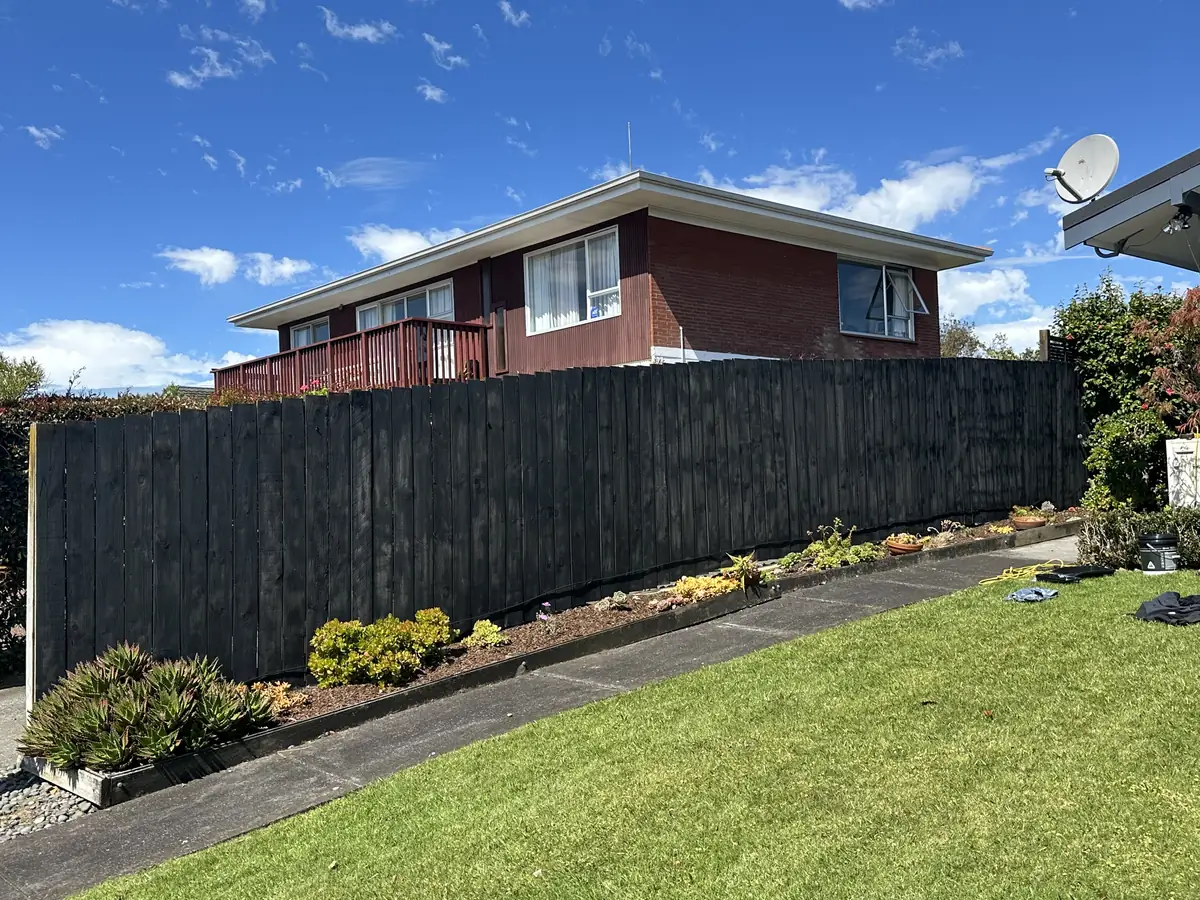
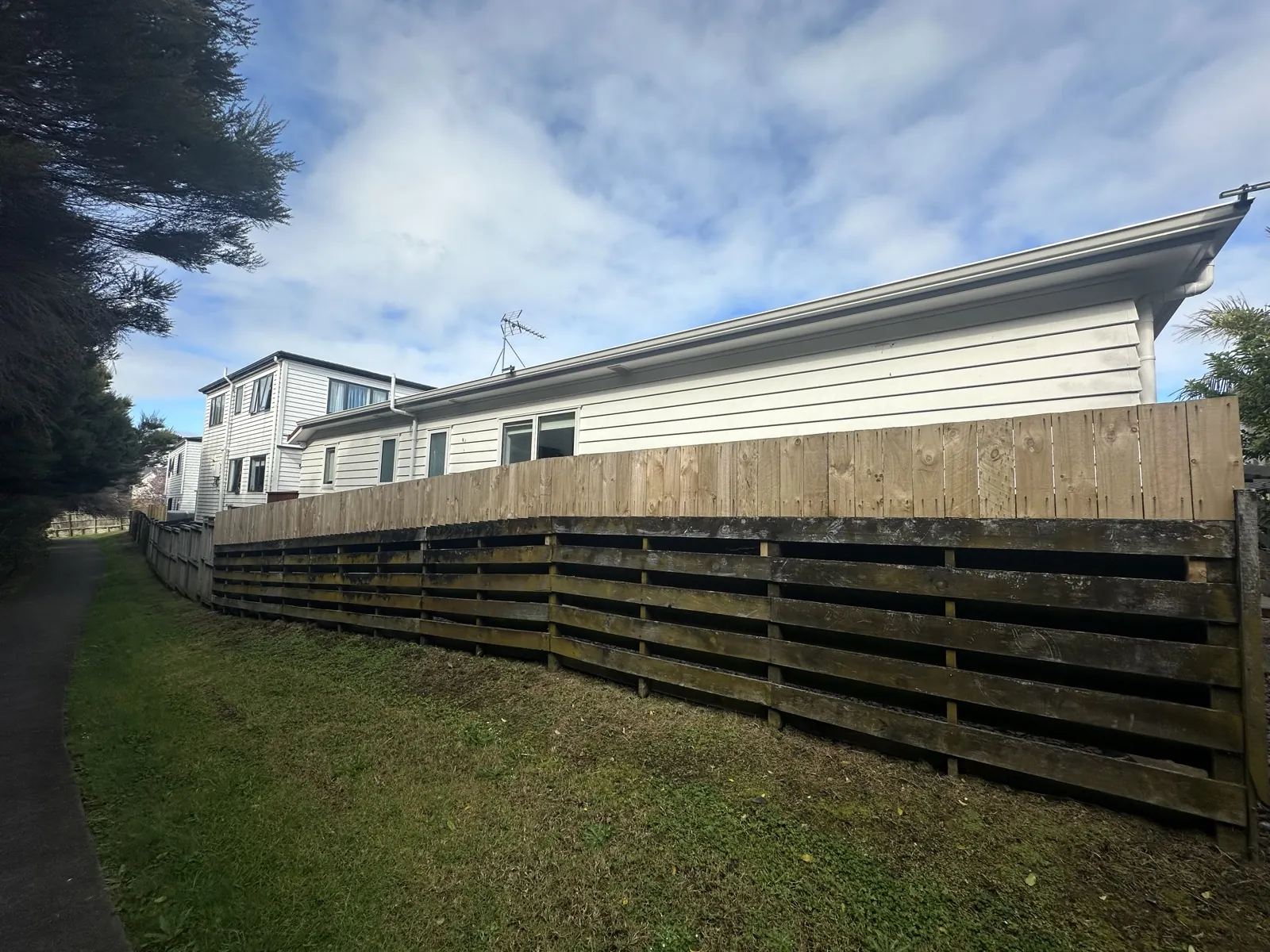
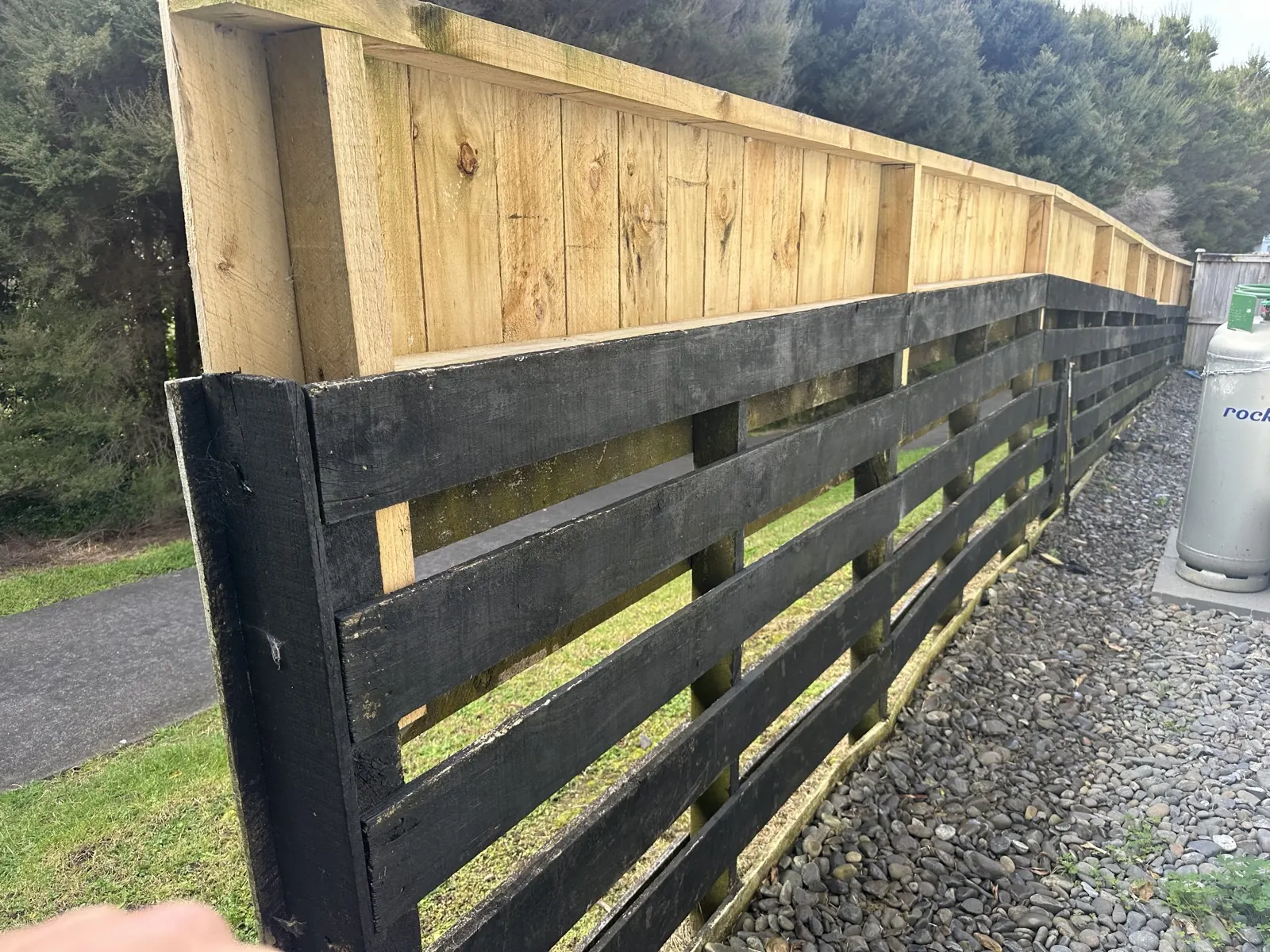
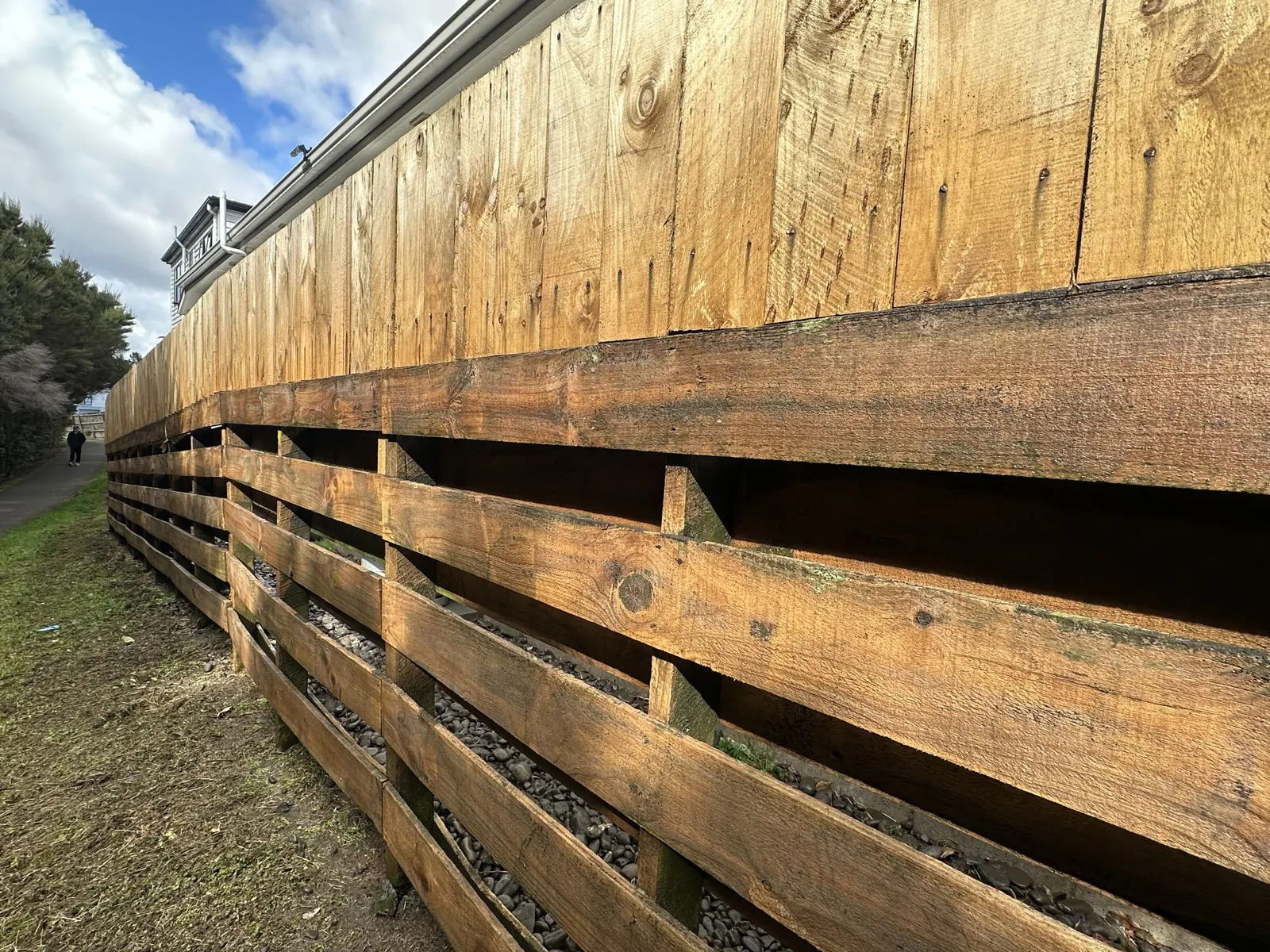
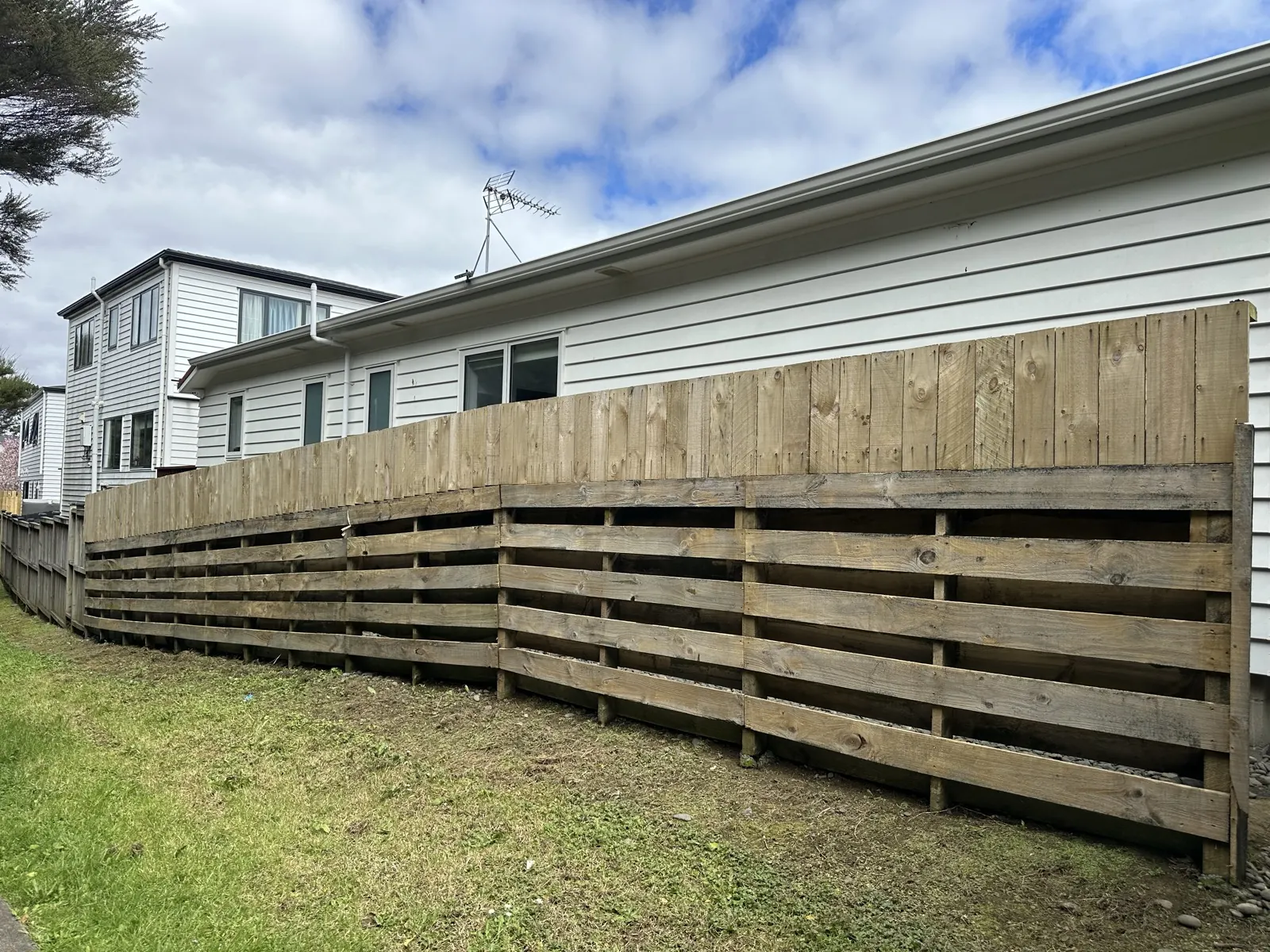
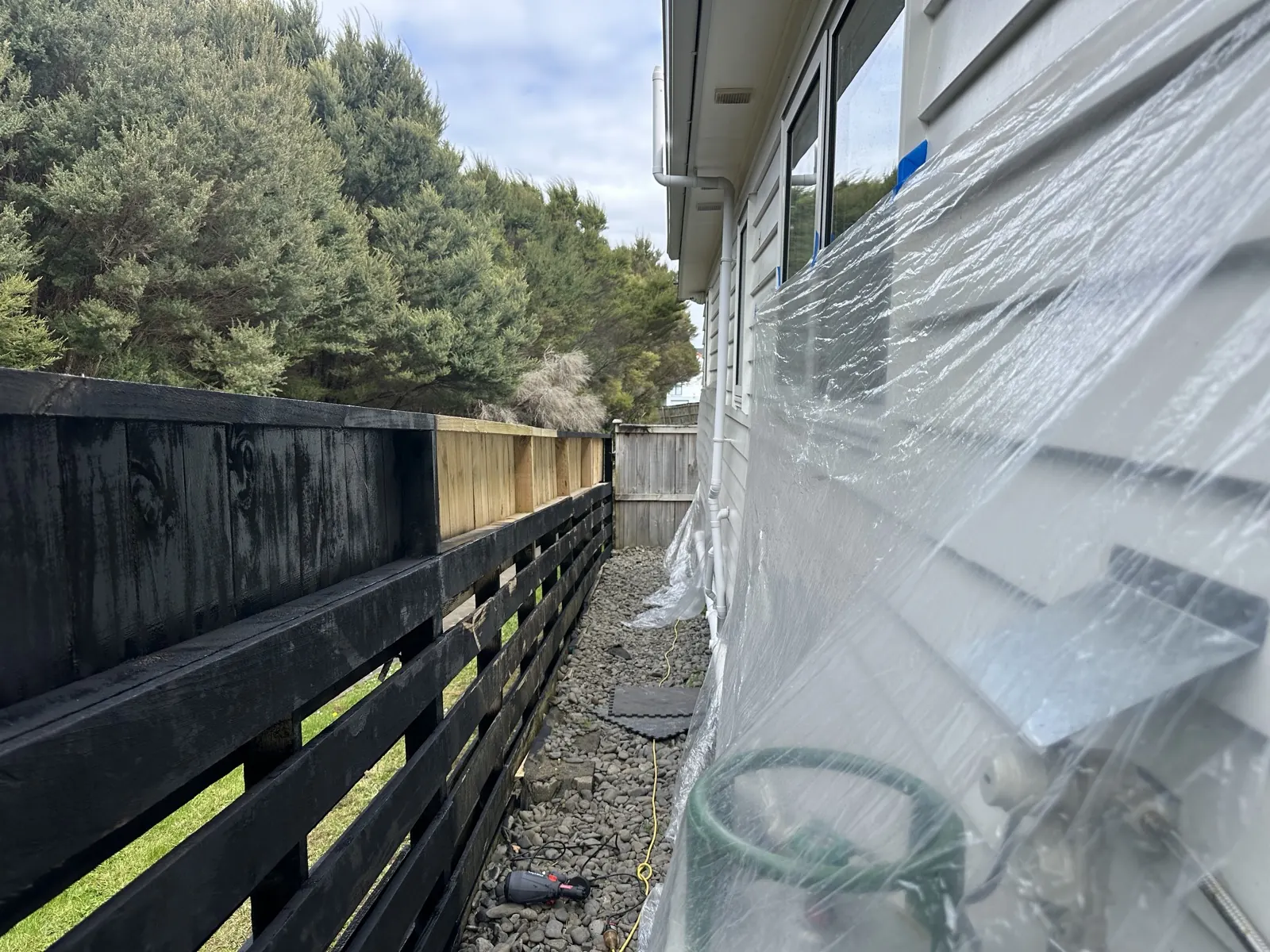
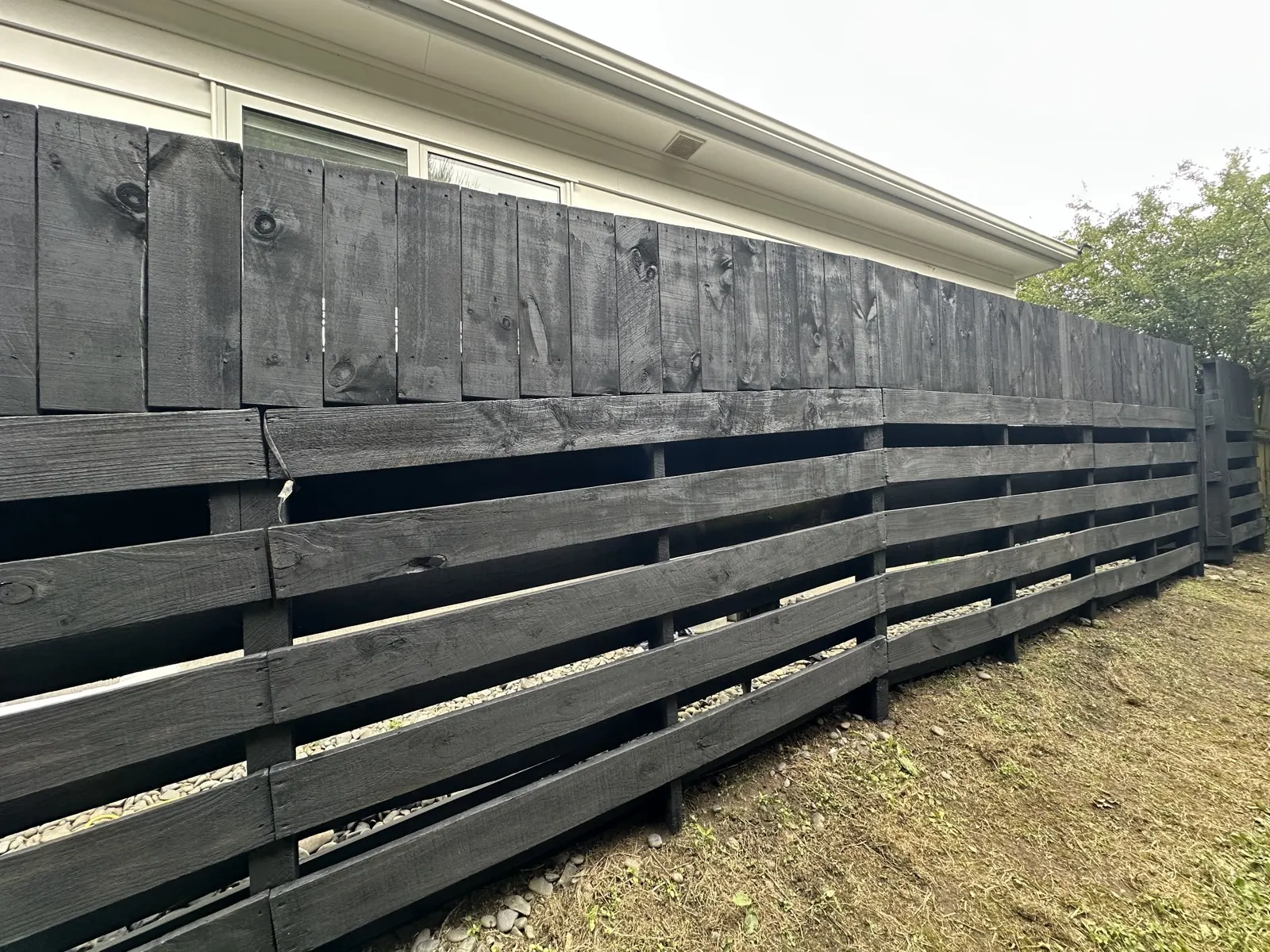
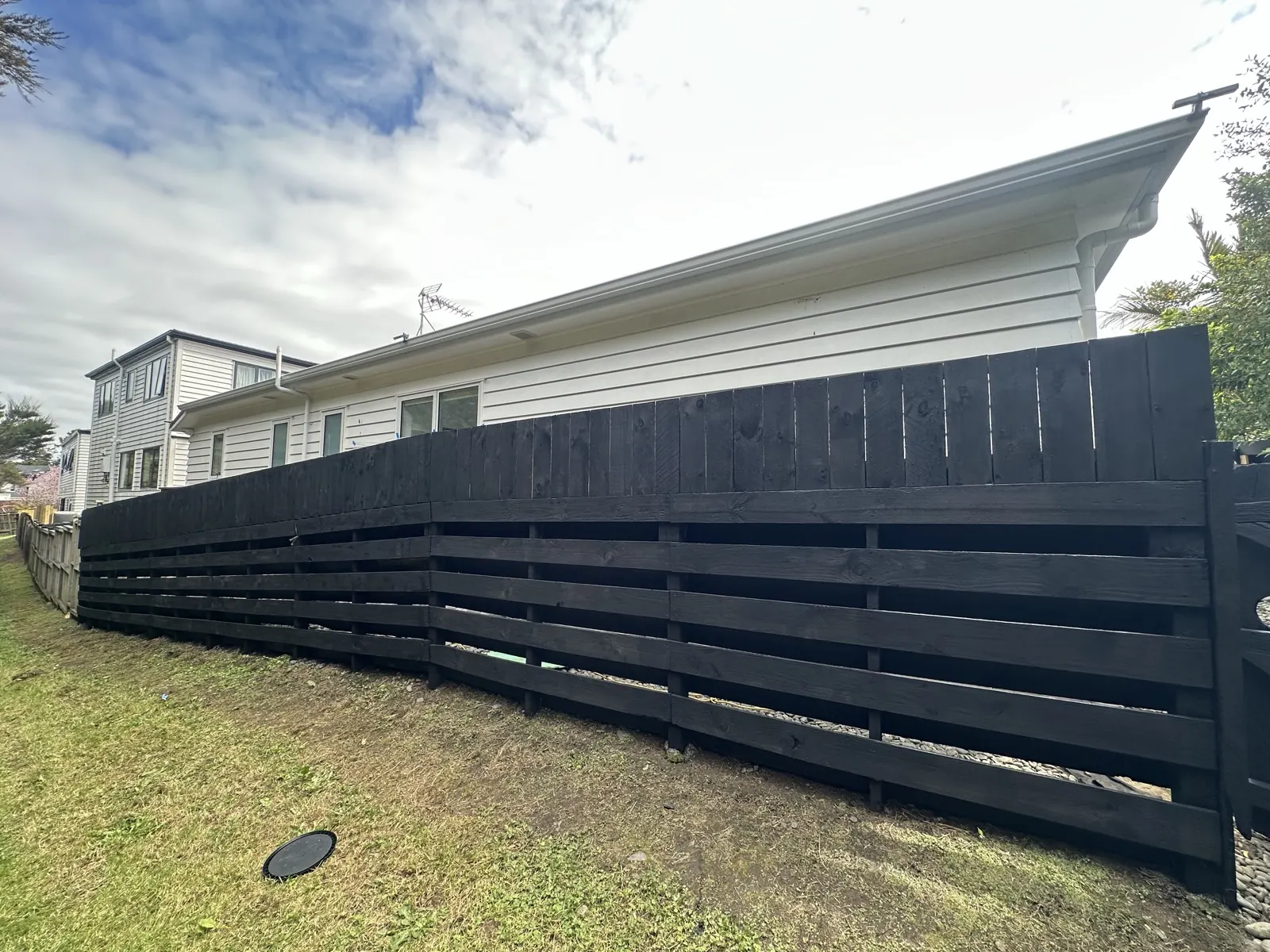
The fence backs onto a reserve walkway. At some point before we were involved, the owners had the original low fence raised with a new section of palings on top, for privacy. Two different timbers, two different ages, one fence.
They asked for the new section to be painted. The honest answer was that painting only the new part would make the mismatch worse, not better: fresh paint on new timber beside twenty-year-old paint reads as a repair, not a fence. So the plan was to water blast the old section to bring it back, and paint the new one to meet it.
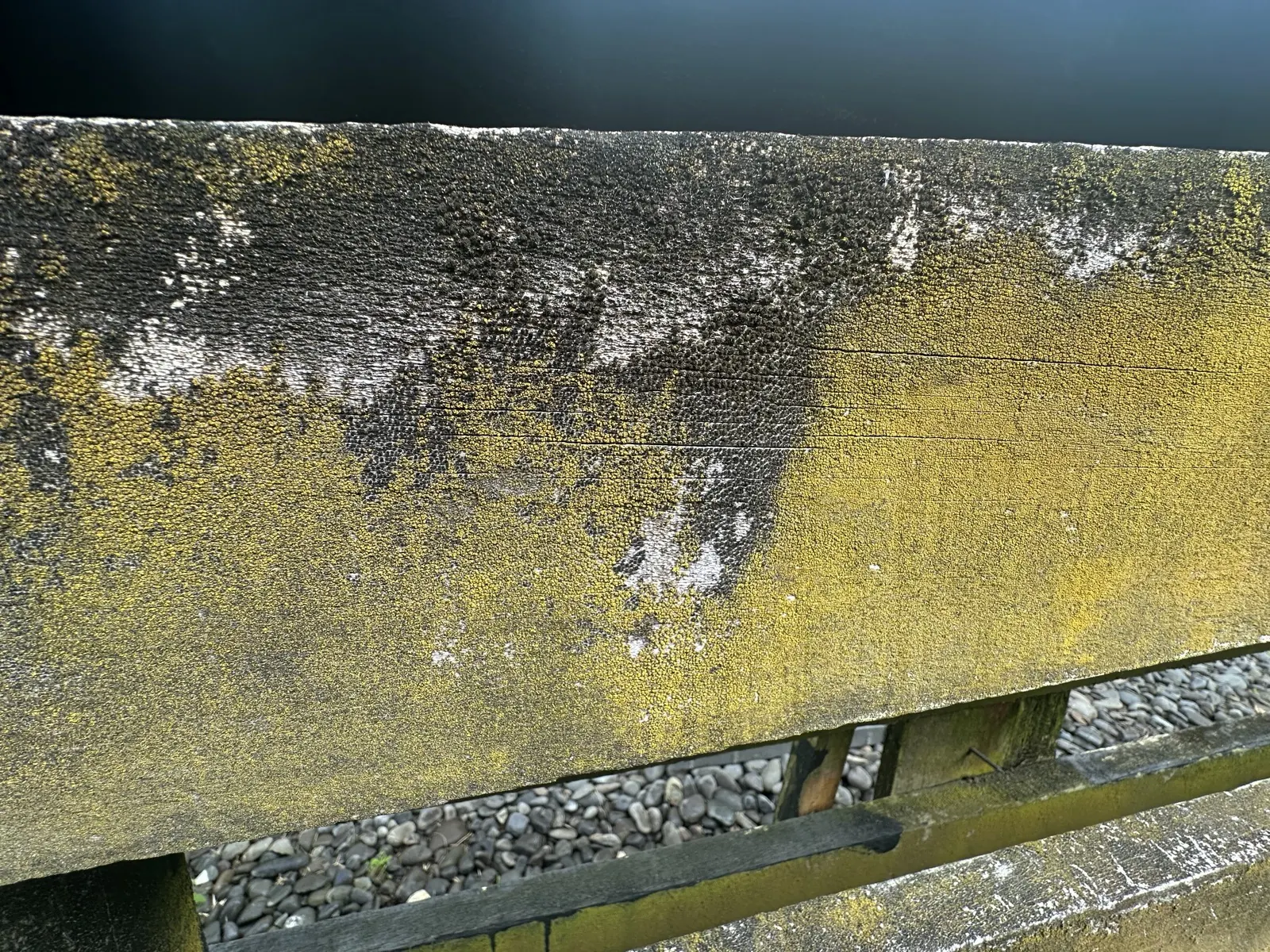
What the wash found changed that. The old rails were covered in moss — not sitting on the surface but grown into the paint. As the moss came off, the paint came with it. Even at a careful distance the two would not separate, because there was no sound paint left underneath for the moss to be sitting on.
By the end of the wash there was no moss and almost no paint. Bare timber, the length of the run. That meant the job was no longer "paint the new section" — it was paint the whole fence. I stopped, explained what had happened and what it now took, and agreed the change with the owners before any paint came out.
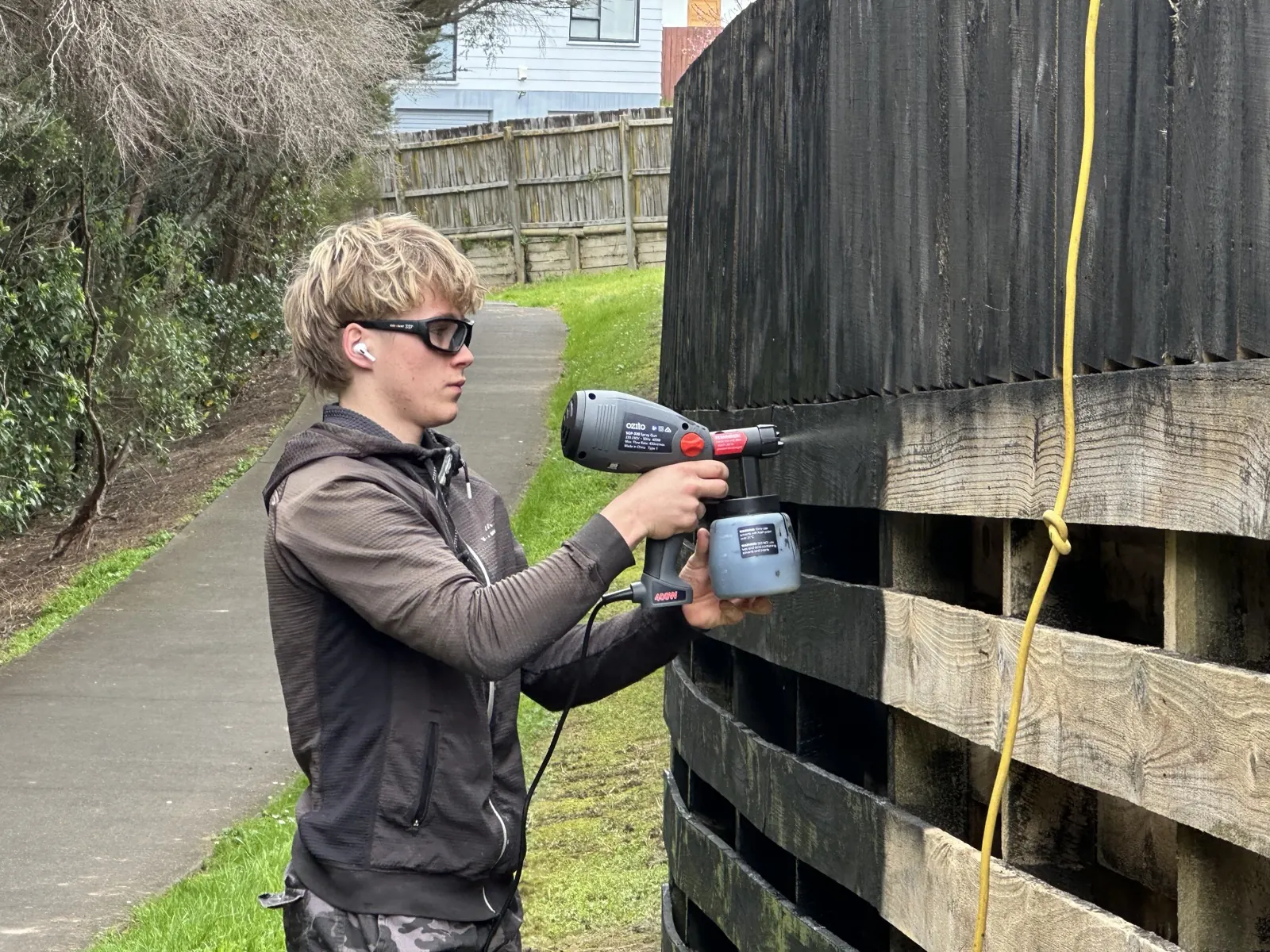
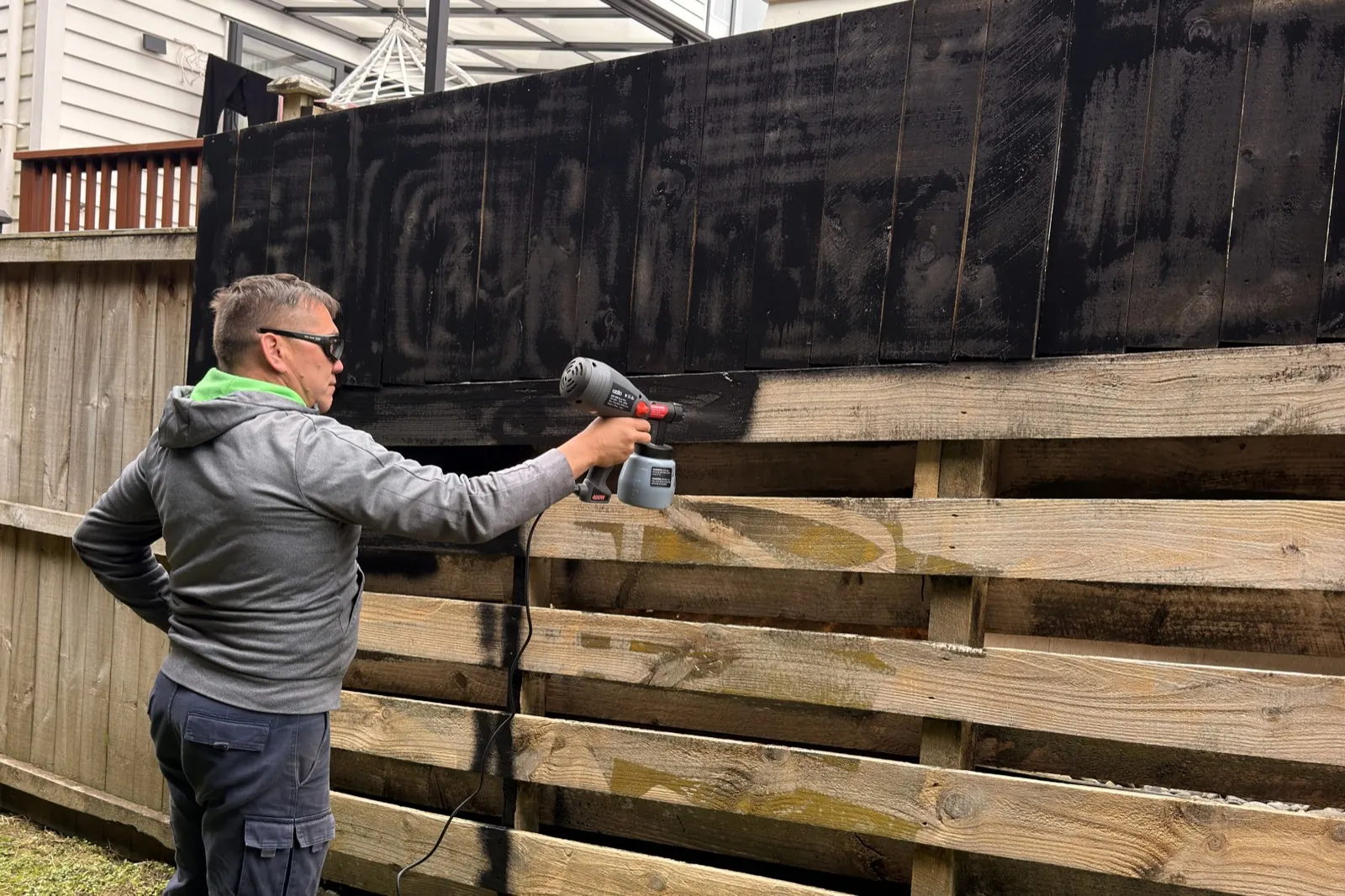
Then the part that is easy to underestimate: this fence has boards on both faces. Every board had to be covered twice over, and the lower section is open rails with gaps, so there is no shortcut of rolling a flat surface. That is where the hours went.
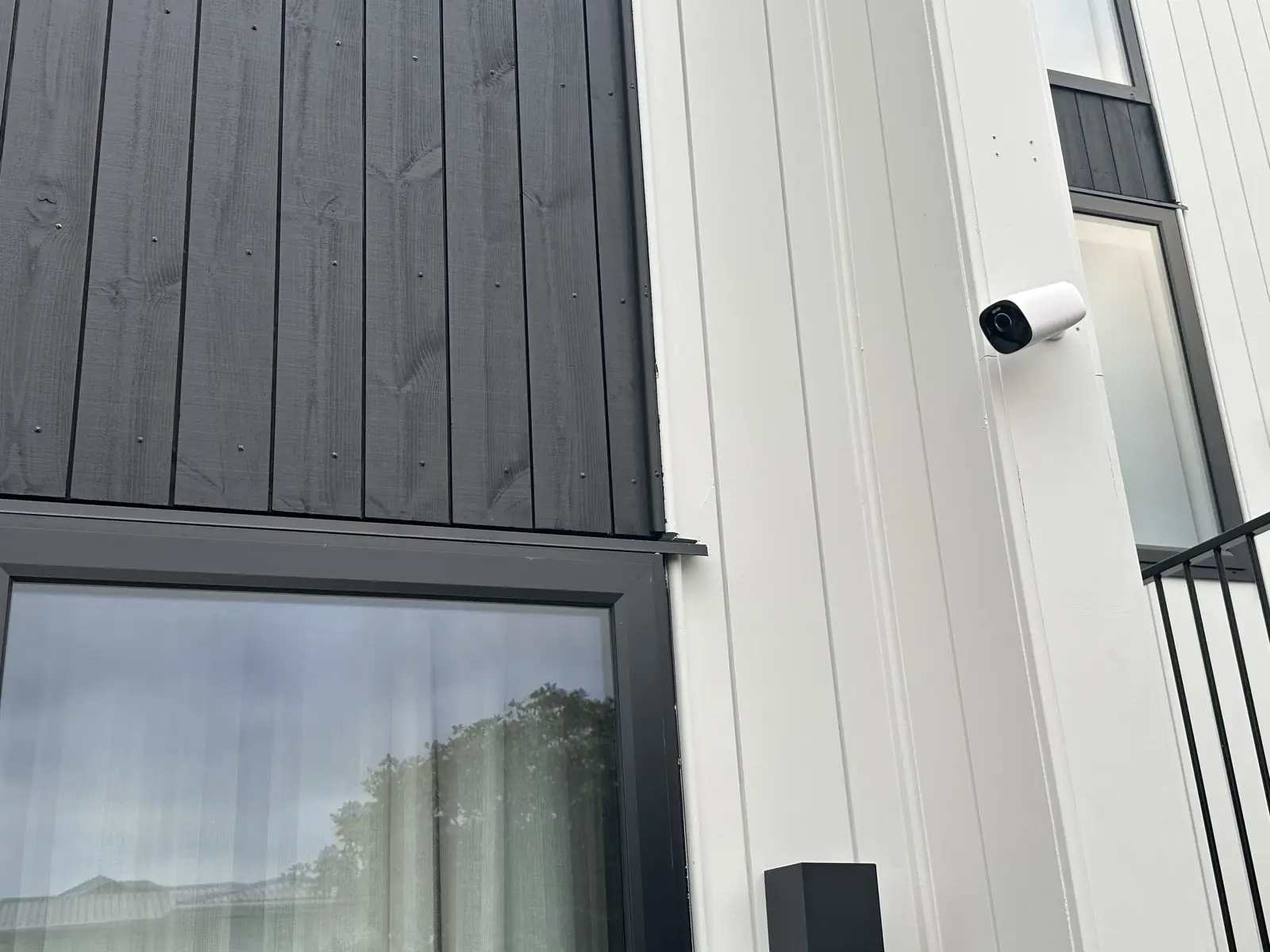
Spraying also meant protecting the house. The fence runs close to the weatherboards, and spraying from the reserve side pushes paint straight through the gaps between the rails. The wall and windows went under plastic sheeting before a drop of black was sprayed — black overspray on a white weatherboard house is not something you fix afterwards.
Eight hours, two of us. My apprentice was on the gun for part of it; the reason he was there was to learn to do it properly, not to make the day shorter.