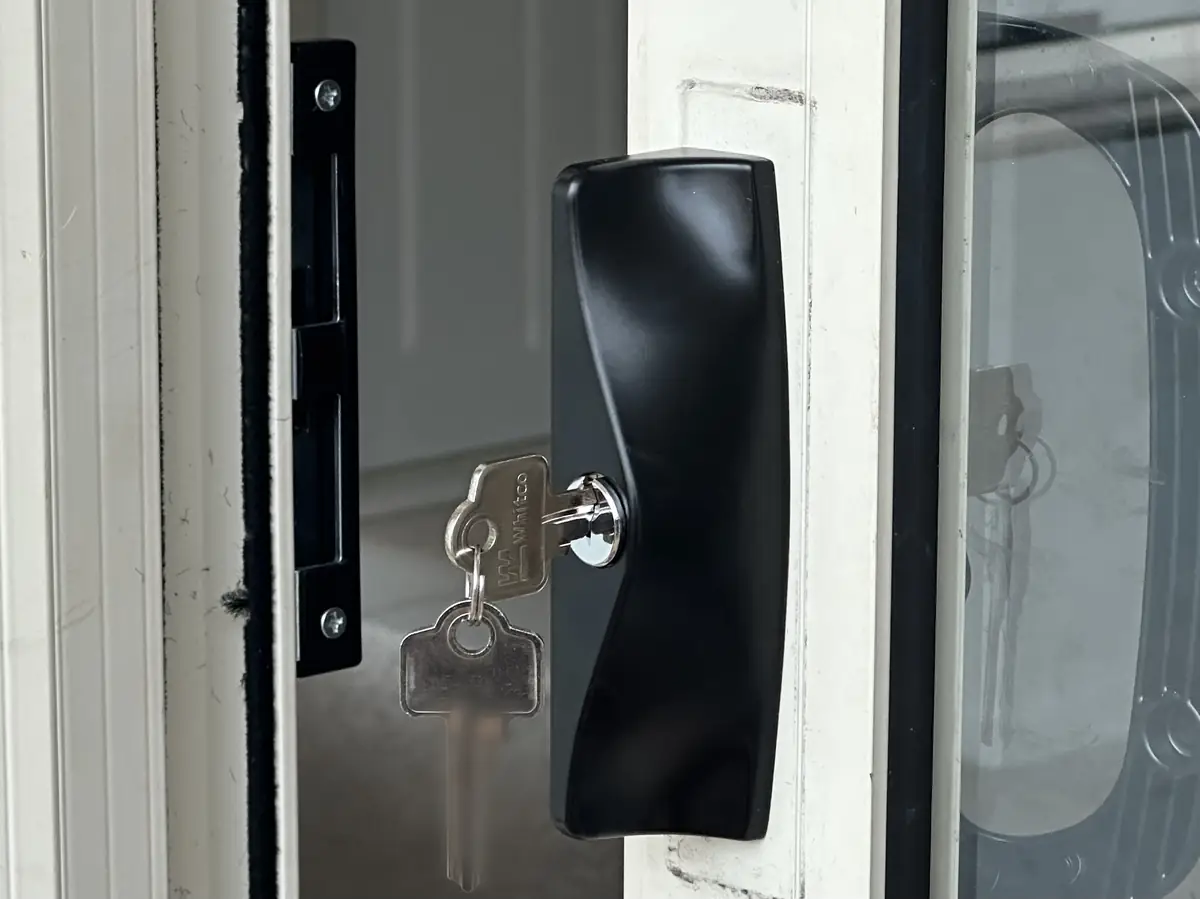
About This Sliding Door Lock Job
The call came in the day before and the job was not urgent, so we set it for the next day. The problem was simple to describe: the sliding door could be locked from inside, and that was all. No key, no way to lock it behind you on the way out.
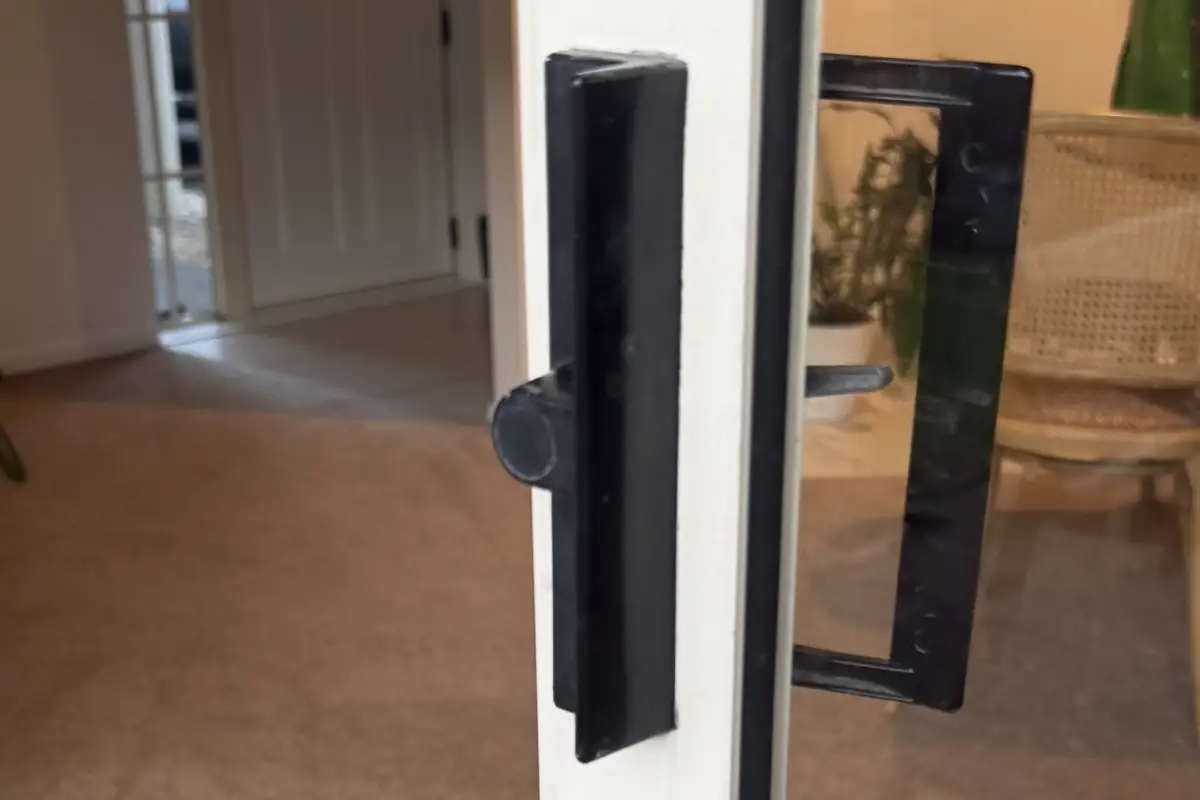
The reason was visible on the handle. Where a key barrel sits on the keyed version of that lock, this one had a blind plug — a plain cap filling the hole. The same handle is sold both ways, and at some point this house got the one without.
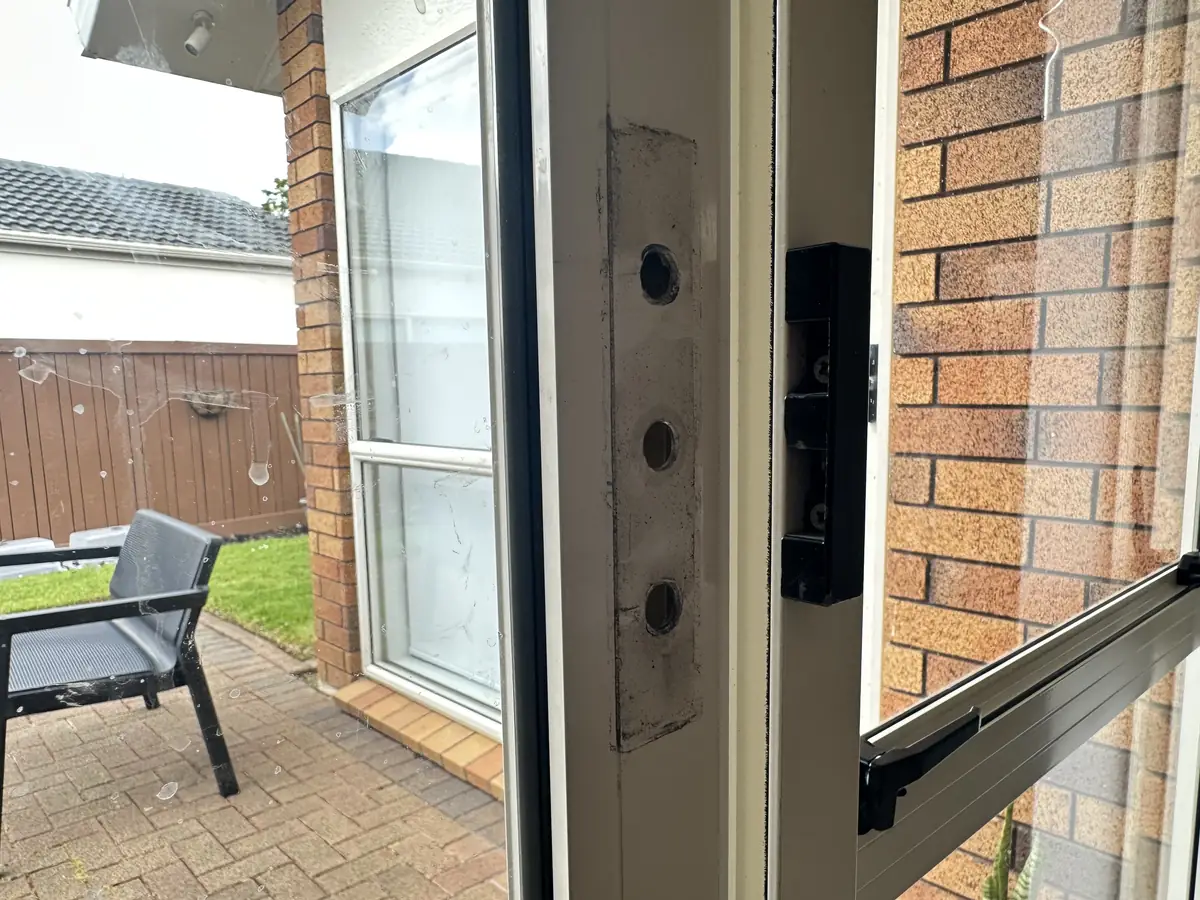
Here is where a job like this stops being five minutes. Sliding door locks are not a standard part. The depth of the mortise cut into the door edge, the spacing of the fixing screws, the distance back from the edge, the keeper already set into the jamb — all of it varies by door brand and by age. Buy something that looks the same and you end up drilling fresh holes, packing out gaps, and leaving a door that was fine before looking repaired.
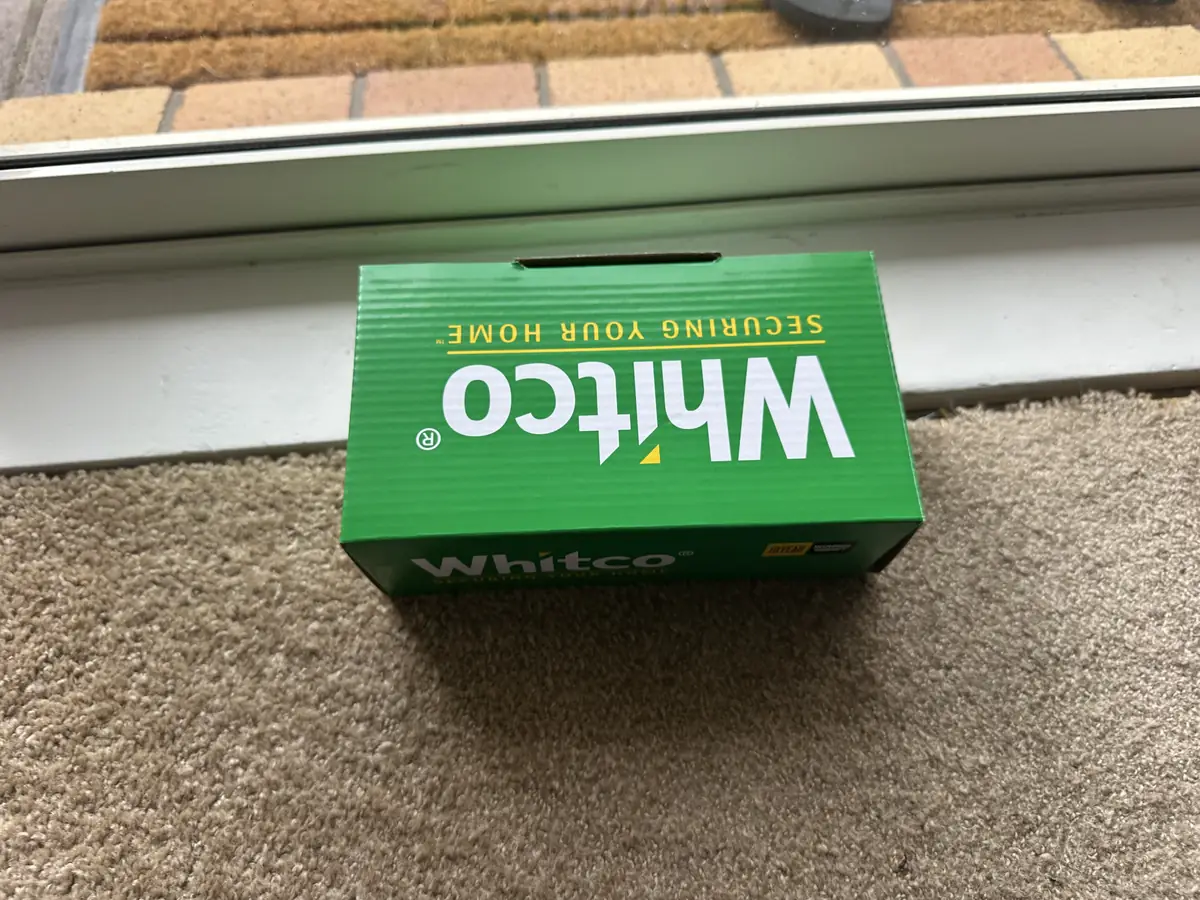
So the first visit was to take the old lock off and nothing else. It went with me to the supplier, where it could be matched against the real thing rather than against a tape measure. The match turned out to be a Whitco keyed unit — same mortise, same centres, same keeper.
The second visit was the easy half: the new lock went straight into the holes the old one came out of, the keeper on the jamb stayed where it was, and the keys went to the owner. Nothing on the door was cut, drilled or filled.
Two hours across both visits, $250 for the job with the lock included, done on my own.
More on whether your own sliding door can take a key, and why the answer needs the lock in hand: Can You Add a Key Lock to a Sliding Door?